20년 후 학습자료 - 미국 유학, AP English, SAT Reading 대비
영어 원문을 근거로 AP English Literature, SAT Reading, IB English, 미국 고등학교 에세이까지 연결하는 실전 학습 가이드입니다.
이 학습자료는 미국식 문학 수업과 영어 에세이 작성을 목표로 합니다. 작품 전체 흐름을 먼저 잡고 싶다면 본문 해설을 먼저 읽어도 좋습니다.
이 자료의 목표
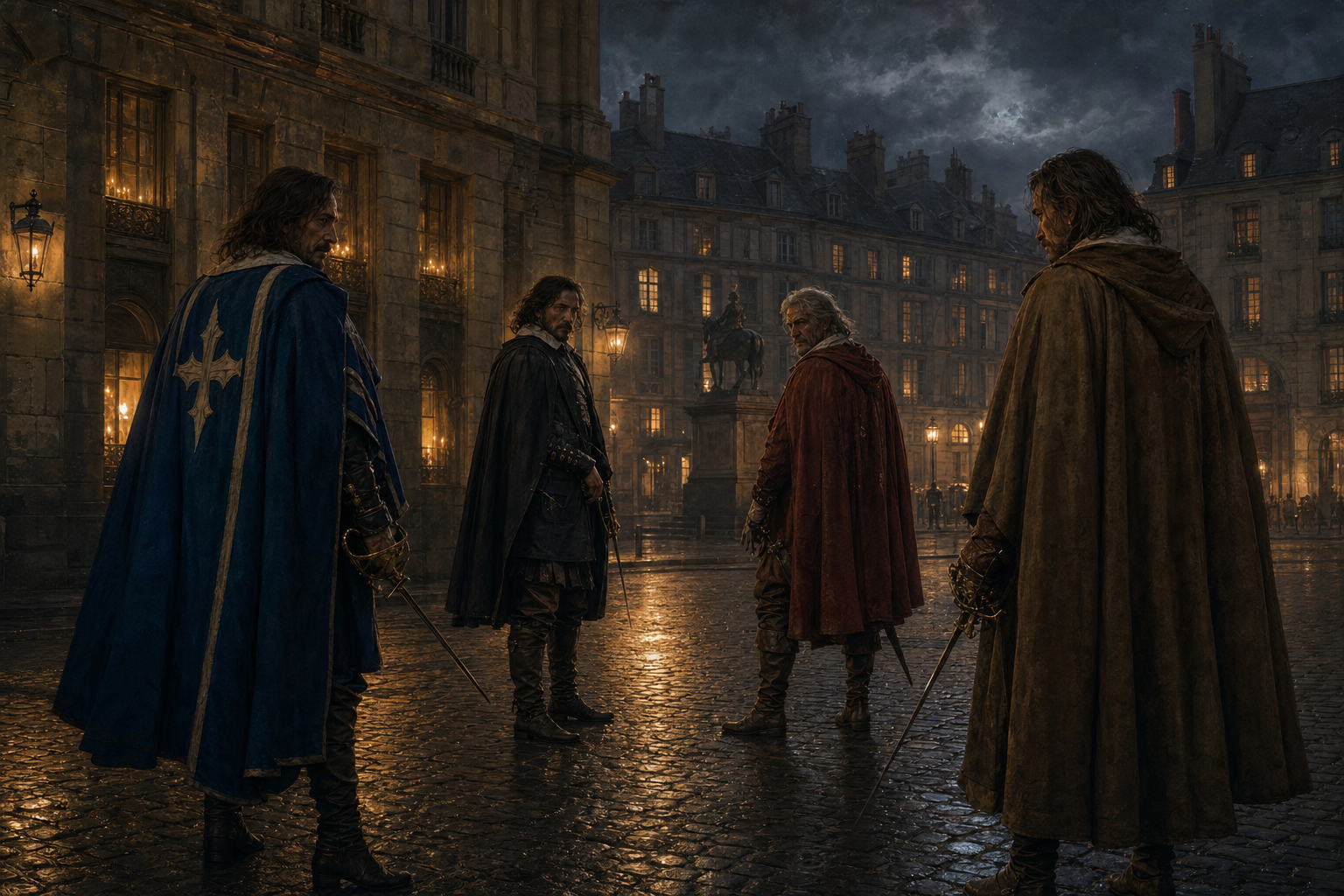
한국어로 설명하지만, 실제 시험과 수업에서 필요한 표현은 영어로 익히는 방식입니다. 『20년 후』는 단순 모험담이 아니라 sequel structure, historical fiction, political loyalty, revenge plot, aging friendship을 함께 분석하기 좋은 작품입니다.
이 자료는 다음 능력을 연습합니다.
- sequel에서 인물 변화가 주제를 어떻게 만드는지 설명하기
- D'Artagnan, Athos, Porthos, Aramis의 loyalty 차이를 영어로 정리하기
- Fronde와 English Civil War가 private friendship을 어떻게 압박하는지 분석하기
- 짧은 원문 구절을 evidence -> interpretation -> claim으로 바꾸기
- SAT Reading 스타일 추론, 기능, 어휘 문제에 익숙해지기
1. Quick Review
- Original title: Twenty Years After
- Authors: Alexandre Dumas and Auguste Maquet
- Published: serialized in 1845
- Main settings: Paris, Vincennes, Bragelonne, English Civil War London, Whitehall, the sea, Rueil, and Saint-Germain
- Series position: second D'Artagnan romance, after The Three Musketeers
- Central conflict: the old friends reunite in a Europe where political service, conscience, ambition, and revenge divide them
- Core themes: aging friendship, loyalty, political compromise, consequence, honor, class ambition, historical change
- Exam focus: sequel structure, character foils, historical setting, tonal mixture, revenge plot, aphoristic narration
한 문장 요약은 이렇게 정리할 수 있습니다.
Twenty years after their youthful adventures, the four musketeers reunite in a world of civil war and political compromise, where friendship remains real but no longer simple.
2. 시험용 줄거리 구조
Exposition
마자랭은 안 도트리슈의 섭정 아래 프랑스를 움직이지만, 파리는 세금과 의회 갈등 때문에 프롱드로 기울고 있습니다. 달타냥은 20년 동안 충분히 보상받지 못한 군인으로 등장하고, 마자랭은 그의 경험과 침착함을 이용하려 합니다.
Reunion and Division
달타냥은 아라미스, 포르토스, 아토스를 다시 찾습니다. 그러나 아라미스는 프롱드와 연결되어 있고, 포르토스는 작위를 원하며, 아토스는 라울과 명예에 집중합니다. 재회는 따뜻하지만, 정치적 입장은 이미 갈라져 있습니다.
French Intrigue
보포르 공작의 탈출과 파리의 소요는 정치가 얼마나 희극적이면서 위험한지 보여 줍니다. 네 친구는 서로를 사랑하지만 각자의 의무 때문에 다른 편에 서기도 합니다.
English Crisis
앙리에타 마리아는 찰스 1세를 구하려 하고, 총사들은 영국 내전의 절망적인 구조 작전에 얽힙니다. 그러나 재판과 처형은 개인적 용기가 공적 역사를 언제나 바꿀 수는 없음을 보여 줍니다.
Revenge and Return
밀라디의 아들 모르당트가 복수자로 등장합니다. 바다 위의 대결은 예전 동료애를 다시 살리지만, 동시에 과거의 폭력이 다음 세대로 돌아왔다는 사실을 확인시킵니다. 마지막에는 보상과 이별이 함께 옵니다.
3. 핵심 원문 구절 읽기
아래 Passage들은 외울 문장이 아니라 close reading 연습용 근거입니다. 각 구절에서 speaker, situation, diction, syntax, theme을 확인한 뒤, 짧은 essay claim으로 바꾸는 훈련을 하세요.
Passage 1: twenty years in service
I have been a captain in the queen's guards for twenty years.
맥락: 초반부에서 왕실 군인과 마자랭 주변 인물들은 봉사, 명령, 충성의 문제를 말합니다.
읽는 법: twenty years는 단순한 시간 정보가 아니라 오래 봉사했는데도 보상이 충분하지 않은 세계를 보여 줍니다. 이 작품에서 시간은 배경이 아니라 인물의 불만과 자격을 설명하는 근거입니다.
Essay use: Aging hero, delayed recognition, service without reward를 논할 때 사용할 수 있습니다.
Passage 2: the Fronde named
My lord, Fronde is the name the discontented give to their party.
맥락: 마자랭은 거리의 불만이 어떻게 하나의 정치적 이름을 얻는지 듣습니다.
읽는 법: the discontented는 이념보다 감정과 불만을 먼저 보여 줍니다. 이름이 생기는 순간, 흩어진 불평은 공적 세력처럼 보이기 시작합니다.
Essay use: Historical setting, political language, public mood 분석에 좋습니다.
Passage 3: the old dinner
The second interview between the former musketeers was not so formal and threatening as the first.
맥락: 네 친구는 식탁에서 예전 친밀감을 잠시 회복합니다.
읽는 법: former musketeers는 연속성과 거리감을 동시에 줍니다. 그들은 여전히 그 사람들이지만, 공식적이고 감정적인 세계는 이미 과거가 되었습니다.
Essay use: Sequel structure와 friendship under pressure를 설명할 때 쓰기 좋습니다.
Passage 4: past and future
Oh! the past is another thing, said Athos, sighing; the past and the future.
맥락: 아토스는 밀라디의 죽음, 모르당트, 라울을 떠올리며 과거와 미래를 연결합니다.
읽는 법: past and future는 아토스가 결과와 상속을 가장 무겁게 느끼는 인물임을 보여 줍니다. 과거의 폭력은 끝난 사건이 아니라 다음 세대의 위험이 됩니다.
Essay use: Memory, consequence, inherited guilt, Athos's conscience에 연결하세요.
Passage 5: public death
These men are going to behead your father. Do not forget that.
맥락: 찰스 1세가 처형 직전 어린 아들에게 말합니다.
읽는 법: behead your father는 왕권의 정치적 언어를 가족의 고통으로 바꿉니다. Do not forget은 기억을 의무로 만듭니다.
Essay use: English Civil War chapters, royalist pathos, public history and private grief에 사용할 수 있습니다.
Passage 6: success and sleeplessness
When we arrive at the summit of our wishes, success has usually the power to drive away sleep.
맥락: 결말부에서 달타냥과 포르토스는 오래 바라던 보상을 얻지만 잠들지 못합니다.
읽는 법: summit은 성취를 뜻하지만, sleeplessness는 성공이 평안을 보장하지 않음을 보여 줍니다. 뒤마의 해설자는 모험을 심리 관찰로 바꿉니다.
Essay use: Ambition, reward, restless ending 분석에 좋습니다.
Passage 7: uncertain parting
Then they departed, without knowing whether they would ever see each other again.
맥락: 마지막에 네 친구는 다시 헤어집니다.
읽는 법: 단순한 문장이지만 without knowing이 성숙한 불확실성을 만듭니다. 우정은 남아 있지만, 시간과 역사는 여전히 그들보다 큽니다.
Essay use: Ending, aging friendship, mature loyalty를 논할 때 핵심 근거가 됩니다.
4. Close Reading: 후속작 구조와 충성 읽기
『20년 후』를 읽을 때는 "모험이 또 벌어진다"에서 멈추면 약합니다. 이 작품은 sequel이기 때문에, 독자는 이미 네 친구의 과거를 알고 있다고 가정합니다. 따라서 장면마다 "무엇이 반복되는가"와 "무엇이 달라졌는가"를 같이 봐야 합니다.
먼저 인물의 역할을 확인하세요. D'Artagnan은 soldier와 career man의 언어를, Athos는 conscience와 fatherhood의 언어를, Porthos는 appetite와 recognition의 언어를, Aramis는 secrecy와 design의 언어를 자주 가집니다.
그다음 역사적 압력을 보세요. Paris street, Vincennes, Whitehall, sea, Mazarin's oubliettes 같은 공간은 단순 배경이 아닙니다. 각 공간은 개인의 우정을 공적 정치 안으로 밀어 넣습니다.
세 번째로 문장의 시간 표현을 표시하세요. twenty years, former, past and future, without knowing 같은 말은 줄거리 정보를 넘어서, 청춘의 확신이 성숙한 불확실성으로 바뀌었음을 보여 줍니다. AP Lit 답안에서는 이런 시간 표현을 "인물들이 예전과 같다"가 아니라 "예전의 우정이 다른 조건 속에서 다시 시험된다"는 claim으로 바꾸는 것이 좋습니다.
마지막으로 충성을 하나로 단순화하지 마세요. 달타냥의 loyalty는 직업과 보상에 붙어 있고, 아토스의 loyalty는 명예와 라울의 미래에 붙어 있으며, 아라미스의 loyalty는 우정과 정치 설계 사이에서 흔들립니다. 같은 단어라도 누가 말하는지에 따라 의미가 달라진다는 점을 쓰면, close reading이 단순 줄거리 요약보다 훨씬 강해집니다.
특히 "friendship"을 쓸 때는 감정만이 아니라 선택의 조건까지 함께 설명해야 합니다.
Worked example:
Through the plain uncertainty of "whether they would ever see each other again," Dumas and Maquet turn the musketeers' friendship from youthful certainty into mature loyalty, suggesting that the bond matters because it survives time rather than escaping it.
5. Literary Devices: 『20년 후』에서 바로 쓰는 장치
Sequel structure: 인식과 변화
독자는 『삼총사』의 우정을 기억합니다. 작품은 그 기억을 활용한 뒤, 20년이 인물의 욕망과 의무를 어떻게 바꾸었는지 보여 줍니다.
에세이에서는 "같은 인물들이 다시 나온다"에서 멈추지 말고, 재등장이 어떤 변화를 드러내는지 써야 합니다. 달타냥의 늦은 보상, 아토스의 부성애, 아라미스의 정치적 비밀성은 모두 sequel structure가 만들어 내는 의미입니다.
Foil structure: 네 가지 충성
달타냥, 아토스, 포르토스, 아라미스는 서로를 비추는 foil입니다. 모두 loyalty를 중요하게 여기지만, career, conscience, status, strategy 중 어디에 충성을 두는지가 다릅니다.
이 대비는 객관식 문제에서도 자주 쓰기 좋습니다. 누가 더 용감한가를 묻기보다, 각 인물이 같은 위기 앞에서 어떤 가치 기준을 먼저 선택하는지 비교하면 됩니다.
Historical setting: 사적 행동과 공적 위기
프롱드와 영국 내전은 배경 장식이 아닙니다. 재판, 처형, 군중, 조약, 체포가 개인적 용기를 제한합니다.
따라서 역사적 사건은 단순한 배경 지식이 아니라 문학 장치입니다. Whitehall의 처형 장면은 왕권 논쟁을 가족의 상처로 바꾸고, Paris의 소요는 친구들의 선택을 거리의 압력 속에 놓습니다.
Tonal mixture: 희극과 비극의 공존
포르토스의 허영과 달타냥의 농담은 찰스 1세의 처형, 모르당트의 복수와 같은 작품 안에 있습니다. 이 혼합이 뒤마식 성숙함입니다.
Revenge plot: 과거의 대가
모르당트는 밀라디의 죽음을 끝난 사건에서 현재의 위협으로 바꿉니다. 복수 플롯은 단순 긴장 장치가 아니라 consequence의 장치입니다.
Aphoristic narration: 모험을 해석으로 늦추기
해설자는 성공, 운명, 욕망에 대한 일반 문장을 자주 던집니다. 이런 문장은 빠른 줄거리를 잠시 멈추고 의미를 생각하게 합니다.
예를 들어 성공이 잠을 빼앗는다는 말은 단순한 재치가 아니라 결말 해석의 열쇠입니다. 달타냥과 포르토스가 보상을 얻어도 완전히 쉬지 못한다는 점이, 이 작품의 성숙한 모험관을 압축합니다.
장치를 고를 때는 장면, 인물, 역사적 압력, 작품 전체의 의미를 한 문장 안에 연결해 보세요.
6. 인물 분석을 영어 답안으로 바꾸기
D'Artagnan
career loyalty and tactical intelligence
D'Artagnan은 왕실과 마자랭을 섬기지만, 그 충성은 순수한 복종이 아니라 늦어진 보상을 얻기 위한 실용적 선택입니다.
Essay sentence: D'Artagnan shows that loyalty in the sequel is practical as well as emotional, shaped by career, speed, and the need to survive politics.
Athos
conscience, fatherhood, and memory
Athos는 라울의 미래와 밀라디의 과거를 함께 생각하기 때문에 가장 도덕적으로 무거운 인물입니다.
Essay sentence: Through Athos, the novel turns adventure into moral accounting, asking whether past violence can be answered by future nobility.
Porthos
embodied friendship and social ambition
Porthos의 작위 욕망은 우습지만, 인정받고 싶은 인간적 욕망을 드러냅니다.
Essay sentence: Porthos keeps the novel's politics grounded in bodily loyalty, appetite, and the human desire to be publicly recognized.
Aramis
strategy, secrecy, and divided sincerity
Aramis는 친구이면서도 정치적 설계자입니다. 이중성이 그를 매력적이고 위험하게 만듭니다.
Essay sentence: Aramis complicates friendship by showing how affection can coexist with manipulation and political ambition.
Mordaunt
revenge as inherited consequence
Mordaunt는 악역이지만, 동시에 밀라디 사건의 상처가 다음 세대로 넘어왔다는 증거입니다.
Essay sentence: Mordaunt makes consequence personal, turning the musketeers' old victory into a new moral threat.
7. 주제별 Thesis 만들기
Friendship
Loyalty After Division
Weak thesis: The musketeers are still friends.
Strong thesis: Dumas and Maquet present friendship as a bond tested by age and politics, valuable because it returns after division rather than because it remains untouched.
Politics
History Limits Heroism
Weak thesis: The book has political events.
Strong thesis: By placing the musketeers inside the Fronde and the English Civil War, the novel shows that private courage can act nobly without always being able to redirect history.
Memory
The Past Is Not Finished
Weak thesis: Mordaunt wants revenge.
Strong thesis: Mordaunt transforms the earlier Milady plot into inherited consequence, forcing the heroes to confront what their youthful certainty left unresolved.
Ambition
Reward and Restlessness
Weak thesis: D'Artagnan wants a promotion.
Strong thesis: The conclusion treats promotion and nobility as satisfying but incomplete rewards, showing that ambition can survive even the achievement it seeks.
8. SAT Reading Sample
아래 문제는 공식 College Board 문제가 아니라, 작품 원문과 시험 유형을 바탕으로 만든 SAT Reading 스타일 연습문제입니다. 질문, 보기, Answer: X. 표기는 영어로 두고, 해설은 한국어로 정리했습니다.
Question 1
The phrase "twenty years in the queen's service" mainly emphasizes:
- A. D'Artagnan's lack of military training
- B. the comic uselessness of royal guards
- C. the long duration of service without full reward
- D. the end of monarchy in France
Answer: C. 이 표현은 달타냥의 능력 부족이 아니라 오래 봉사했는데도 충분히 보상받지 못한 시간을 강조합니다. 왕실 군대가 우스꽝스럽다는 뜻도 아니고, 프랑스 왕정이 끝났다는 역사 설명도 아닙니다.
Question 2
When the Fronde is described as "the name the discontented give to their party," the wording suggests that political identity begins with:
- A. public feeling and shared grievance
- B. a completed military constitution
- C. foreign conquest
- D. private romance
Answer: A. the discontented는 정치 세력이 완성된 제도보다 먼저 공유된 불만과 감정에서 출발함을 보여 줍니다. 군사 헌법, 외국 정복, 사적 연애는 프롱드의 거리 정치와 맞지 않습니다.
Question 3
The reunion dinner is important because it:
- A. proves the friends have no disagreements
- B. removes politics from the novel
- C. shows Porthos has lost his appetite
- D. briefly restores old intimacy while exposing old guilt
Answer: D. 식탁은 옛 친밀감을 잠시 되살리지만, 동시에 밀라디와 모르당트라는 오래된 죄책감을 불러냅니다. 친구들이 아무 갈등이 없다는 뜻도 아니고, 정치가 사라지는 장면도 아닙니다.
Question 4
Athos's phrase "the past and the future" connects memory with:
- A. comic relief only
- B. consequence across generations
- C. geographical description
- D. Mazarin's wealth
Answer: B. 아토스는 과거의 밀라디 사건과 라울의 미래를 함께 생각합니다. 그래서 이 표현은 세대에 걸친 결과와 책임을 연결합니다. 단순 농담이나 지리 묘사가 아닙니다.
Question 5
Mordaunt's role in the novel is best described as:
- A. the past returning as revenge
- B. a neutral historian
- C. a comic servant
- D. the king of France
Answer: A. 모르당트는 밀라디의 아들로서 과거의 폭력이 복수의 형태로 돌아온 인물입니다. 그는 중립적 역사가도, 희극적 하인도, 프랑스 왕도 아닙니다.
Question 6
The English Civil War chapters show that heroic rescue:
- A. always succeeds when friends cooperate
- B. is irrelevant to political history
- C. depends only on Porthos's appetite
- D. can be noble yet unable to stop public events
Answer: D. 총사들은 용감하게 움직이지만 찰스 1세의 재판과 처형을 막지 못합니다. 이 장면은 용기가 무의미하다는 뜻이 아니라, 공적 역사의 흐름 앞에서 개인적 영웅성이 제한될 수 있음을 보여 줍니다.
Question 7
Charles's words to his son before death mainly turn politics into:
- A. a discussion of food
- B. family trauma and remembered duty
- C. a joke about soldiers
- D. a map of Paris
Answer: B. 찰스의 말은 처형이라는 공적 사건을 자식에게 남겨지는 기억과 의무로 바꿉니다. 음식, 군인 농담, 파리 지리와는 관련이 없습니다.
Question 8
Porthos's desire for a barony most clearly reveals:
- A. hatred of all friendship
- B. rejection of physical courage
- C. social ambition mixed with comic vanity
- D. secret loyalty to Cromwell
Answer: C. 포르토스의 작위 욕망은 웃기지만, 동시에 사회적 인정 욕망을 보여 줍니다. 친구를 싫어하거나 용기를 거부하는 것이 아니며, 크롬웰과도 연결되지 않습니다.
Question 9
Aramis functions as a foil to D'Artagnan because Aramis tends to favor:
- A. open military command over strategy
- B. hidden influence and political design
- C. complete withdrawal from intrigue
- D. ignorance of all factions
Answer: B. 달타냥이 직접적이고 전술적으로 움직인다면, 아라미스는 성직과 귀족 네트워크를 활용해 숨은 영향력과 정치 설계를 선호합니다. 그래서 두 인물의 차이는 성격 차이를 넘어, 공개적 행동과 비밀스러운 권력 운용의 대비가 됩니다.
Question 10
The line "success has usually the power to drive away sleep" implies that achievement:
- A. ends desire forever
- B. proves all politics moral
- C. makes friendship unnecessary
- D. can produce restlessness rather than peace
Answer: D. 성공은 평안을 보장하지 않고 오히려 흥분과 불안을 만들 수 있습니다. 욕망이 완전히 끝난다는 뜻도, 정치가 모두 도덕적이라는 뜻도 아닙니다.
Question 11
The novel's use of Mazarin instead of Richelieu helps create:
- A. a contrast between anxious calculation and grand authority
- B. a setting without political power
- C. a purely romantic subplot
- D. a narrator who never comments
Answer: A. 마자랭은 리슐리외의 거대한 권위와 대비되는 불안하고 계산적인 권력을 보여 줍니다. 정치 권력이 사라진 배경도 아니고, 순수 연애담도 아닙니다.
Question 12
Raoul matters structurally because he:
- A. replaces all four musketeers immediately
- B. has no connection to Athos
- C. carries the future of honor beyond the older generation
- D. leads the Fronde from the first chapter
Answer: C. 라울은 아토스가 미래에 남기고 싶은 명예의 가능성입니다. 그는 네 총사를 즉시 대체하지도 않고, 프롱드를 처음부터 이끄는 인물도 아닙니다.
Question 13
The sea episode with Mordaunt mainly tests:
- A. whether the friends can still act together under mortal pressure
- B. whether Mazarin can cook
- C. whether Paris has enough taxes
- D. whether Charles becomes king of France
Answer: A. 바다 위 장면은 생명의 위협 속에서도 네 친구가 여전히 함께 판단하고 행동할 수 있는지를 시험합니다. 마자랭의 요리나 세금 문제와는 무관합니다.
Question 14
The phrase "former musketeers" is significant because it:
- A. denies that the men ever knew each other
- B. marks both continuity and distance from youth
- C. names a new school
- D. describes Cromwell's army
Answer: B. former는 그들이 여전히 같은 사람들이면서도 젊은 시절의 공식 정체성과는 거리가 생겼음을 보여 줍니다. 서로 모른다는 뜻이 아닙니다.
Question 15
The Fronde setting most strongly supports which theme?
- A. Nature heals all conflict
- B. Childhood has no political meaning
- C. Loyalty becomes difficult when public factions multiply
- D. Wealth solves conscience
Answer: C. 프롱드는 친구들을 서로 다른 정치적 의무 속에 놓아 loyalty를 어렵게 만듭니다. 자연 치유, 어린 시절, 부의 해결력은 이 배경의 핵심이 아닙니다.
Question 16
D'Artagnan's final wish to keep his old room suggests:
- A. practical awareness that fortune can change
- B. complete retirement from action
- C. contempt for all memory
- D. fear of ever seeing Porthos again
Answer: A. 달타냥은 대위가 되었지만 운명이 다시 바뀔 수 있음을 압니다. 이 장면은 그의 실용성과 조심성을 보여 줍니다. 보상을 얻은 뒤에도 완전한 안정이 오지 않는다는 점이 결말의 성숙한 분위기와 연결됩니다.
Question 17
The best description of the novel's tone is:
- A. only tragic from beginning to end
- B. purely comic with no danger
- C. documentary without adventure
- D. comic, nostalgic, political, and tragic at once
Answer: D. 작품은 포르토스식 희극, 옛 친구에 대한 향수, 프롱드의 정치극, 찰스 1세의 비극, 모르당트의 복수극을 함께 섞습니다. 그래서 단순 모험담보다 더 넓은 역사적·정서적 스케일을 갖습니다.
Question 18
Athos differs from D'Artagnan most clearly in his emphasis on:
- A. conscience and inherited responsibility
- B. salary alone
- C. comic appetite
- D. indifference to Raoul
Answer: A. 아토스는 양심과 라울에게 이어질 책임을 중시합니다. 달타냥은 더 전술적이고 경력 중심적이므로 두 인물의 대비가 선명합니다. 이 대비는 작품이 충성을 하나의 덕목이 아니라 여러 형태의 선택으로 보여 준다는 점을 드러냅니다.
Question 19
Why does the book's ending separate the friends again?
- A. To show that friendship has been false all along
- B. To mature the old bond by placing it inside time and duty
- C. To erase all sequel possibilities
- D. To prove Porthos dislikes titles
Answer: B. 결말의 이별은 우정이 거짓이었다는 뜻이 아니라, 각자의 의무와 시간 속에서도 우정이 남을 수 있음을 보여 줍니다. 젊은 시절의 한 몸 같은 결속이 성숙한 거리감으로 바뀌는 장면입니다.
Question 20
Which claim best captures the novel as historical fiction?
- A. It uses public events to test private loyalty and moral action.
- B. It avoids all real political references.
- C. It treats history as less important than clothing.
- D. It argues that friendship prevents all executions.
Answer: A. 프롱드와 영국 내전은 인물의 사적 우정과 도덕적 행동을 시험하는 공적 사건으로 작동합니다. 이 역사적 압력 때문에 네 친구의 용기는 중요하지만, 언제나 역사를 이기는 힘으로 그려지지는 않습니다.
9. AP Lit Essay Questions
아래 문항은 구체적 장면을 thesis, outline, textual evidence, commentary로 바꾸는 AP Lit 스타일 연습 질문입니다.
Essay Question 1
Analyze how Twenty Years After uses sequel structure to change the meaning of friendship from youthful unity to mature loyalty. Use at least two of the four musketeers as evidence.
Essay Question 2
D'Artagnan serves Mazarin while often judging him. Explain how the novel uses D'Artagnan to explore practical loyalty, ambition, and political compromise.
Essay Question 3
Athos is shaped by fatherhood and memory. Analyze how his concern for Raoul and his guilt over Milady alter the adventure plot's moral tone.
Essay Question 4
Porthos is often comic, but his desire for a title reveals a serious social pressure. Analyze how Dumas and Maquet use Porthos to connect comedy with recognition.
Essay Question 5
Aramis combines religious office, friendship, and intrigue. Analyze how his character complicates simple definitions of loyalty.
Essay Question 6
The Fronde turns Paris into a space of rumor, slogans, street pressure, and political bargaining. Analyze how the setting makes private friendship politically difficult.
Essay Question 7
The escape of Beaufort mixes comedy, timing, servants, and political risk. Analyze how this episode shows Dumas's method of turning history into adventure.
Essay Question 8
Mordaunt is both villain and consequence. Analyze how his revenge plot forces the musketeers to revisit the moral certainty of their earlier actions.
Essay Question 9
The English Civil War chapters place the musketeers near events they cannot fully control. Analyze how the failed attempt to save Charles I limits the fantasy of heroic action.
Essay Question 10
Choose one scene of reunion or parting. Analyze how Dumas and Maquet use gesture, dialogue, or understatement to show the emotional cost of time.
Essay Question 11
Mazarin is often comic or unimpressive, yet he remains politically effective. Analyze how the novel distinguishes charisma from power.
Essay Question 12
Analyze how Raoul functions as a future-oriented figure in a novel dominated by aging heroes and returning consequences.
Essay Question 13
The novel often places jokes beside death or danger. Analyze how tonal mixture shapes the reader's understanding of adventure.
Essay Question 14
Analyze the significance of prisons and enclosed spaces, such as the Bastille, Vincennes, Whitehall, and Mazarin's oubliettes, in the novel's political imagination.
Essay Question 15
The four friends define success differently. Compare two definitions of success in the novel and explain what each reveals about character.
Essay Question 16
Analyze how Dumas and Maquet use public crowds, from Paris streets to the Whitehall execution, to turn politics into spectacle.
Essay Question 17
The novel repeatedly shows old enemies becoming temporary allies or old friends becoming temporary opponents. Analyze what this pattern suggests about time and political change.
Essay Question 18
Choose a passage in which the narrator offers a general observation. Analyze how aphoristic narration converts adventure into moral reflection.
Essay Question 19
Analyze how the sea episode with Mordaunt tests the musketeers' old teamwork while also exposing the unresolved violence of the past.
Essay Question 20
The conclusion grants rewards but not full closure. Analyze how the ending balances satisfaction, separation, ambition, and uncertainty.
10. Model Thesis Bank
- Dumas and Maquet use sequel structure to show that friendship becomes more meaningful, not less, when it survives age, division, and separate obligations.
- D'Artagnan's service to Mazarin reveals a practical form of loyalty in which ambition and duty are inseparable.
- Athos transforms the adventure plot into moral reckoning because he reads both Raoul and Mordaunt as consequences of the past.
- Porthos's comic desire for a barony exposes the serious human need for public recognition.
- Aramis complicates loyalty by combining sincere affection with secrecy, clerical authority, and political manipulation.
- The Fronde setting turns Paris into a pressure chamber where friendship must operate inside factional conflict.
- Beaufort's escape shows Dumas's talent for converting political history into suspenseful, comic, and practical action.
- Mordaunt makes inherited revenge the form through which the earlier novel's violence returns for judgment.
- The failed rescue of Charles I shows that private courage can be noble even when it cannot stop public history.
- Reunion scenes in the novel are powerful because they restore old intimacy while revealing that time has made restoration incomplete.
- Mazarin's anxious, calculating power proves that political effectiveness does not require grandeur.
- Raoul gives the novel a future beyond nostalgia, embodying Athos's hope that honor can be transmitted without repeating every old mistake.
- The novel's comic-tragic tone makes adventure feel mature, allowing laughter to exist beside execution, civil war, and revenge.
- Enclosed spaces in the novel turn politics into confinement, showing how power controls bodies before it controls loyalty.
- D'Artagnan and Athos define success differently: one seeks earned advancement, while the other seeks moral continuity.
- Public crowds in the novel transform politics into spectacle, making private decisions visible under social pressure.
- The shifting pattern of allies and enemies suggests that time changes political meaning faster than it changes emotional memory.
- Aphoristic narration slows the adventure plot long enough to make success, fortune, and loyalty objects of reflection.
- The sea episode proves that the old teamwork still exists, but it also reveals that survival cannot erase inherited guilt.
- The conclusion satisfies the desire for reward while refusing permanent closure, leaving the musketeers loyal, separated, and still unfinished.
11. Academic Vocabulary for Essays
- sequel structure: 전작의 인물과 사건을 바탕으로 시간이 지난 뒤의 변화를 보여 주는 구조
- historical fiction: 실제 역사적 압력 속에 허구적 또는 각색된 인물을 놓는 소설
- faction: 정치적 이해관계나 불만을 중심으로 형성된 세력
- Fronde: 루이 14세의 미성년기 프랑스에서 벌어진 일련의 내전적 갈등
- royalism: 왕권 또는 군주제를 지지하는 태도
- political spectacle: 권력이 대중 앞에서 장면처럼 드러나는 사건
- foil: 대비를 통해 다른 인물을 더 선명하게 만드는 인물
- aphorism: 삶이나 인간 행동에 대한 짧고 일반화된 진술
- consequence: 행동의 결과와 대가
- inherited guilt: 한 세대의 행동이 다음 세대에 남기는 도덕적 부담
- tonal mixture: 희극, 비극, 모험, 복수극이 섞인 어조
- intrigue: 비밀스럽고 복잡한 정치적 책략
- pragmatism: 이상보다 실제 결과를 중시하는 태도
- conscience: 내면의 도덕 판단
- recognition: 공적 인정, 지위, 보상
- nostalgia: 지나간 시절에 대한 그리움
- pathos: 고통과 취약함을 통한 정서적 호소
- legitimacy: 지배하거나 명령하거나 소속될 정당성
- compromise: 무언가를 얻는 대신 순수성이나 완전성을 포기하는 타협
- closure: 결말이 서사와 감정의 긴장을 얼마나 정리하는지