두 도시 이야기 학습자료 - AP English, SAT Reading, 문학 에세이 대비
영어 원문 근거로 AP English Literature, SAT Reading, IB English, 미국식 문학 에세이까지 연결하는 실전 학습 가이드입니다.
이 학습자료는 미국식 문학 수업과 영어 에세이 작성을 목표로 합니다. 작품 전체 흐름을 먼저 잡고 싶다면 본문 해설을 먼저 읽어도 좋습니다.
이 자료의 목표
한국어로 설명하지만, 시험과 에세이에서 실제로 써야 하는 핵심 표현은 영어로 유지합니다. A Tale of Two Cities는 resurrection, sacrifice, doubles, revolutionary violence, memory 같은 주제로 AP Lit 에세이에 쓰기 좋은 작품입니다.
가장 흔한 실수는 이 작품을 "Sydney Carton dies for Charles Darnay"로만 외우는 것입니다. 결말은 중요하지만, 그 결말이 설득력을 얻는 이유는 Dickens가 앞에서 계속 return의 구조를 쌓았기 때문입니다. 사람, 이름, 문서, 사물, 트라우마가 모두 다시 돌아옵니다. 좋은 답안은 Carton의 sacrifice를 말하기 전에 이 반복 구조를 먼저 잡습니다.
이 자료를 끝내면 다음을 할 수 있어야 합니다.
- "Recalled to Life"가 단순한 문구가 아니라 motif임을 설명하기
- Lucie와 Madame Defarge를 memory의 두 방식으로 비교하기
- Sydney Carton과 Charles Darnay의 double 구조 분석하기
- knitting, wine, shoemaking, documents를 상징으로 읽기
- SAT-style inference/function/tone 문제에 근거로 답하기
- scene evidence → device → argument로 이어지는 문단 만들기
1. Quick Review
- Original title: A Tale of Two Cities
- Author: Charles Dickens
- Published: 1859
- Main settings: London; Dover road; Saint Antoine; Tellson's Bank; Paris prisons and Revolutionary courts
- Central conflict: Dr. Manette의 바스티유 트라우마와 Evrémonde 가문의 죄가 프랑스혁명 속에서 Darnay 가족을 위협한다
- Core themes: resurrection, memory, justice, revenge, sacrifice, doubles, trauma, family, political violence
- Exam focus: symbolism, historical setting, foil characters, irony, narrative structure, sacrifice
한 문장 요약:
Dr. Manette is restored from the Bastille, but the Revolution turns his old suffering into evidence against Charles Darnay until Sydney Carton saves the family through substitution.
2. 시험용 줄거리 구조
Exposition
Jarvis Lorry는 Bastille에서 풀려난 Dr. Manette를 데려오고, Lucie는 심리적으로 무너진 아버지를 다시 삶으로 부릅니다. 다만 회복은 안정적이지 않습니다. Manette는 법적으로는 자유롭지만, 마음과 몸은 아직 prison habit에 붙잡혀 있습니다.
Inciting Pattern
"Recalled to Life"는 작품 전체 패턴을 엽니다. 사람, 문서, 이름, 트라우마가 죽은 것처럼 묻혀 있다가 다시 돌아옵니다.
Rising Action
Charles Darnay는 London treason trial에서 Sydney Carton과 닮은 얼굴 덕분에 살아납니다. 이후 Lucie와 결혼하지만, France의 혁명과 Evrémonde family history가 그를 따라옵니다. Saint Antoine의 hunger, Jacques network, Madame Defarge의 knitting은 이 family history가 public violence로 바뀌는 과정을 보여 줍니다.
Crisis
Darnay는 Gabelle을 돕기 위해 France로 돌아갔다가 체포됩니다. Dr. Manette의 명성은 잠시 그를 살리지만, Manette가 Bastille에서 쓴 문서가 다시 그를 고발합니다. 이 reversal이 핵심입니다. Manette의 past suffering이 한순간에는 보호막이 되고, 다음 순간에는 Lucie의 남편을 죽이는 evidence가 됩니다.
Climax
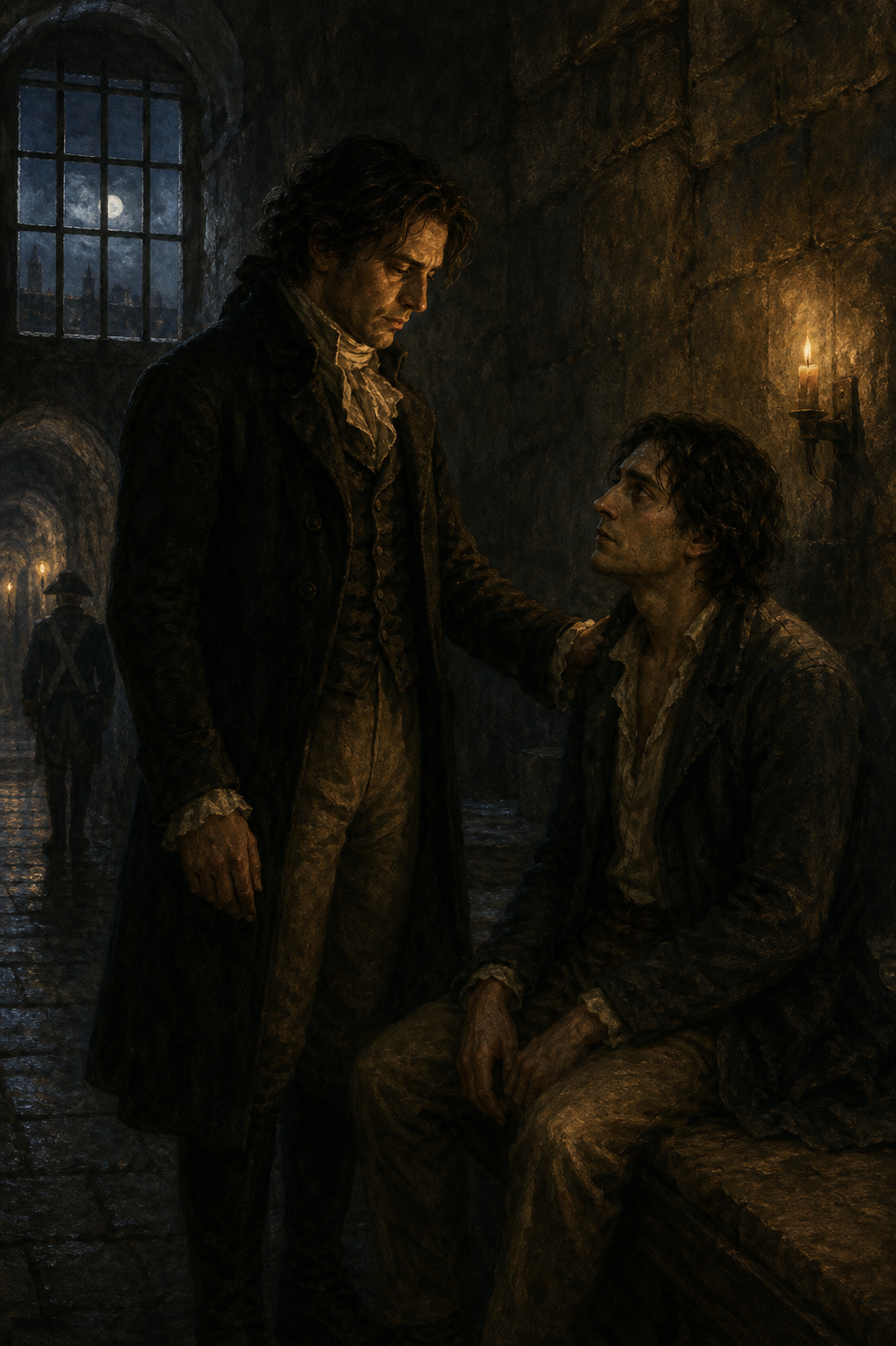
Carton은 Darnay와 닮은 얼굴을 이용해 감옥에서 옷을 바꿔 입고, Darnay를 탈출시킨 뒤 대신 처형장으로 갑니다.
Resolution
Darnay와 Lucie 가족은 탈출하고, Carton은 죽음을 통해 자기 삶을 의미 있는 sacrifice로 바꿉니다.
시험 포인트: "Carton dies for Darnay"라고만 쓰면 약합니다. resurrection motif, doubles, memory, sacrifice가 결말에서 어떻게 합쳐지는지를 설명해야 합니다.
3. 핵심 원문 구절 읽기
아래 Passage는 단순히 유명한 문장이 아니라, wording과 scene function과 theme를 연결하는 연습 재료입니다. AP Lit, SAT Reading, IB English, school essay에서 중요한 질문은 "이 quote의 뜻이 뭐지?"가 아니라 "이 wording이 어떻게 작품의 argument를 보이게 하지?"입니다.
각 구절은 세 번 읽으세요. 첫째, speaker나 narrative situation을 확인합니다. 둘째, antithesis, repetition, symbol, irony, diction, narrative commentary 같은 device를 표시합니다. 셋째, 그 device가 resurrection, memory, justice, doubles, sacrifice 중 어떤 논점을 만드는지 문장으로 바꿉니다.
시험 답안에서는 quoted phrase만 던지고 넘어가면 점수가 약해집니다. 아래의 맥락, 읽는 법, Essay use를 quote에서 commentary로 넘어가는 다리로 쓰세요.
Passage 1: Historical contradiction
It was the best of times, it was the worst of times, it was the age of wisdom, it was the age of foolishness.
맥락: 소설의 첫 문장입니다. 혁명 전후의 시대를 하나의 감정으로 고정하지 않습니다.
읽는 법: balanced antithesis가 핵심입니다. repeated "it was"는 contradiction이 우연이 아니라 시대 구조처럼 느껴지게 합니다.
Essay use: Dickens refuses to make revolution purely heroic or purely monstrous. 라는 thesis에 쓸 수 있습니다. aristocratic cruelty와 revolutionary terror를 함께 다룰 때 첫 문장이 전체 frame이 됩니다.
이 문장을 쓸 때는 "좋은 시대와 나쁜 시대가 공존했다"로 끝내지 마세요. 더 강한 분석은 문장의 균형 구조가 역사 판단의 불안정성을 만든다고 설명합니다. Revolution은 oppression을 끝내려는 hope를 품지만, 동시에 crowd violence와 legal terror를 낳습니다.
Passage 2: The first resurrection code
“You know that you are recalled to life?” “They tell me so.”
맥락: Lorry가 Dr. Manette를 데리러 가는 길에, 묻힌 사람과 대화하는 듯한 꿈을 꾸는 장면입니다.
읽는 법: 질문은 기적처럼 들리지만, 대답은 확신이 없습니다. "They tell me so"는 resurrection이 선언된다고 곧바로 내면의 회복이 되는 것은 아님을 보여 줍니다.
Essay use: Manette, Darnay, Carton, hidden documents가 모두 "return" 구조로 묶인다는 논점에 쓰세요. 중요한 것은 return이 healing과 threat를 동시에 가질 수 있다는 점입니다.
중요한 점은 resurrection이 항상 positive하지 않다는 것입니다. Manette가 돌아오는 것은 회복이지만, 그의 trauma도 돌아옵니다. Bastille document가 돌아오는 것은 truth의 귀환이지만, Darnay에게는 death sentence가 됩니다. 그래서 이 phrase는 hope와 threat를 동시에 여는 code입니다.
Passage 3: Human unknowability
A wonderful fact to reflect upon, that every human creature is constituted to be that profound secret and mystery to every other.
맥락: 화자는 사람이 다른 사람을 완전히 알 수 없다는 사실을 묵상합니다.
읽는 법: "secret"과 "mystery"가 ordinary person을 쉽게 읽을 수 없는 존재로 만듭니다. Dickens는 이름, 얼굴, 직업, 계급만으로 사람을 판단할 수 없다는 세계를 준비합니다.
Essay use: secrecy, hidden trauma, limits of judgment를 말할 때 좋습니다.
이 구절은 Dickens의 social vision과도 연결됩니다. 사람은 직업, 이름, 계급, 법정 기록만으로 완전히 읽히지 않습니다. Darnay는 Evrémonde라는 이름보다 복잡하고, Carton은 drunken failure라는 평판보다 깊으며, Madame Defarge도 단순 악역보다 오래된 wound를 가진 인물입니다.
Passage 4: Wine and blood
The wine was red wine, and had stained the ground of the narrow street in the suburb of Saint Antoine.
맥락: Saint Antoine 거리에서 wine cask가 깨지고, 굶주린 사람들이 거리의 포도주를 마시려 달려드는 장면입니다.
읽는 법: red와 stained의 반복은 hunger를 visual foreshadowing으로 바꿉니다. wine은 실제 가난의 장면이면서 동시에 blood의 상징입니다.
Essay use: social critique와 foreshadowing에 쓰세요. Dickens는 revolutionary violence를 추상적 악이 아니라 material deprivation에서 자라나는 것으로 그립니다.
Passage 5: Carton's self-contempt
I am a disappointed drudge, sir. I care for no man on earth, and no man on earth cares for me.
맥락: Darnay의 재판 뒤, Carton이 Darnay에게 자기 자신을 차갑게 설명하는 장면입니다.
읽는 법: "disappointed drudge"는 wasted labor와 failed hope를 함께 담습니다. 뒤의 negative parallelism은 Carton의 isolation을 완전한 것처럼 들리게 합니다.
Essay use: self-waste에서 self-gift로 이동하는 character arc에 쓰세요. 마지막 sacrifice는 이 despair를 사회적 성공으로 해결하지 않고, 다른 사람의 future를 지키는 action으로 응답합니다.
Carton 분석에서는 "갑자기 영웅이 된다"라고 쓰지 않는 것이 중요합니다. 이 문장은 그가 스스로를 이미 버린 사람처럼 인식한다는 증거입니다. 마지막 sacrifice의 힘은 그 self-contempt가 social success로 해결되지 않고, 다른 사람의 future를 지키는 action으로만 응답된다는 데 있습니다.
Passage 6: Carton's promise
For you, and for any dear to you, I would do anything.
맥락: Carton이 Lucie에게 자기 사랑이 보상을 요구하지 않지만 service가 될 수 있다고 고백하는 장면입니다.
읽는 법: "you"에서 "any dear to you"로 움직이면서 love가 possession이 아니라 protection이 됩니다.
Essay use: 결말이 갑작스러운 반전이 아니라 earlier vow의 fulfillment임을 보여 줍니다.
AP essay에서는 이 약속을 foreshadowing으로만 처리하기 쉽습니다. 그러나 더 좋은 답안은 Carton의 love가 desire에서 ethics로 바뀌는 순간이라고 읽습니다. 그는 Lucie를 소유하려 하지 않고, 그녀가 사랑하는 삶을 보호하겠다고 말합니다.
Passage 7: Defarge's archive
It would be easier for the weakest poltroon that lives, to erase himself from existence, than to erase one letter of his name or crimes from the knitted register of Madame Defarge.
맥락: Madame Defarge의 뜨개질은 반복적으로 등장하는 기록 이미지입니다.
읽는 법: "knitted register"는 domestic labor를 bureaucratic power로 바꿉니다. 기억은 지울 수 없는 문서가 됩니다.
Essay use: memory, gendered power, revenge archive를 설명할 때 쓰세요.
Knitting은 조용한 household action처럼 보이지만, 작품 안에서는 names를 저장하는 political technology가 됩니다. 이 점이 Madame Defarge를 단순히 violent crowd의 일부가 아니라, memory를 system으로 바꾸는 인물로 만듭니다. Lucie의 memory가 person을 살리는 쪽이라면, Defarge의 memory는 person을 category로 고정합니다.
Passage 8: Manette's document and Carton's final meaning
I, Alexandre Manette, unhappy prisoner, do this last night of the year 1767, in my unbearable agony, denounce to the times when all these things shall be answered for.
맥락: Darnay의 재판에서 Manette가 Bastille에 숨겨 두었던 manuscript가 읽힙니다.
읽는 법: formal first-person testimony가 private agony를 public accusation으로 바꿉니다. "to the times"는 문서가 역사적 순간을 기다릴 수 있음을 보여 줍니다.
Essay use: historical irony에 쓰세요. Manette의 truthful witness는 aristocratic crime을 폭로하지만, 그를 회복시킨 딸의 남편을 동시에 위험에 빠뜨립니다.
Carton의 ending을 쓸 때는 이 문서와 "It is a far, far better thing that I do, than I have ever done."을 함께 생각해도 좋습니다. Manette의 문서는 answer를 요구하는 memory이고, Carton의 마지막 행동은 future를 보호하는 memory가 됩니다.
Carton의 final sentence는 단순한 heroic farewell이 아닙니다. Carton은 death를 romantic spectacle로 만들기보다, 자기 life story의 meaning을 다시 씁니다. "far, far"의 repetition은 과거의 waste와 마지막 act 사이에 ethical distance를 만들며, Dickens가 redemption을 survival이 아니라 self-giving으로 정의한다는 점을 보여 줍니다.
4. Close Reading: return, object, double 읽기
1단계: 무엇이 돌아오는가?
사람, 이름, 문서, 트라우마, 빚, 정치적 기억 중 무엇이 돌아오는지 먼저 찾으세요. Dickens는 과거를 거의 묻어 두지 않습니다.
Manette는 Bastille에서 돌아오지만 prison habit도 함께 돌아옵니다. Darnay는 Evrémonde name에서 벗어나려 하지만 Revolution은 그 이름을 다시 불러냅니다. Carton의 resemblance도 마지막에 돌아와 escape의 방법이 됩니다.
2단계: object를 evidence로 보기
Shoes, knitting, wine, letters, bank records, prison manuscripts는 장식이 아닙니다. history를 저장합니다.
Shoemaking은 trauma를 bodily habit으로 저장하고, knitting은 revenge를 coded domestic labor로 저장합니다. wine은 hunger와 blood를 연결하고, documents는 감정보다 오래 살아남아 법정에서 사람을 살리거나 죽입니다.
3단계: justice와 revenge를 분리하기
작품은 Revolution을 단순히 나쁘다고 하지 않습니다. Evrémonde family의 폭력은 실제이고, Saint Antoine의 hunger도 실제입니다.
좋은 essay는 "Dickens condemns the Revolution"에서 멈추지 않습니다. aristocratic cruelty가 justice의 요구를 만들지만, guilt가 bloodline으로 무한히 확장될 때 justice가 revenge가 된다고 써야 더 강합니다.
4단계: double을 moral structure로 읽기
Carton과 Darnay는 닮았지만, 중요한 것은 외모 자체가 아닙니다. London trial에서는 resemblance가 reasonable doubt를 만들고, Paris prison에서는 ethical substitution이 됩니다.
즉 double은 plot trick에서 끝나지 않습니다. Dickens는 한 사람이 다른 사람을 대신할 수 있는가, 그리고 그 대신함이 love가 될 수 있는가를 묻습니다.
5단계: 두 도시가 모두 필요한지 확인하기
약한 답안은 한 도시 안에만 머무르는 경우가 많습니다. 강한 답안은 London과 Paris가 서로 어떻게 답하는지 봅니다. London의 법정에서 resemblance는 Darnay를 살리고, Paris의 감옥에서 resemblance는 실제 목숨을 바꾸는 장치가 됩니다. London의 home은 Manette의 recovery를 돕고, Paris의 document는 그 recovery를 시험합니다.
thesis가 두 도시 중 하나 없이도 그대로 성립한다면 너무 넓은 주장일 수 있습니다.
Worked example: "Recalled to Life"
Literal situation: Lorry가 Dr. Manette의 생존과 회복을 암호처럼 전달받는 장면입니다.
Device: motif, resurrection imagery, ironic phrasing.
Meaning: life로 돌아온다는 말은 따뜻하지만, 작품에서는 trauma와 documents도 함께 돌아옵니다.
Essay sentence: Dickens turns "Recalled to Life" into a double-edged resurrection motif, suggesting that the past can restore persons but also return as accusation.
5. Literary Devices: 작품에 바로 쓰는 장치
Resurrection motif
Manette는 감옥에서 가족에게 돌아오고, Darnay는 Carton 덕분에 죽음에서 돌아오며, Carton은 죽음을 통해 도덕적으로 회복됩니다. 부활은 기쁨만이 아니라 상처를 동반합니다.
답안에서는 resurrection을 "다시 살아남"으로만 번역하지 말고, return with consequences로 읽으세요. Manette의 return은 Lucie의 love를 통해 가능하지만, shoemaking relapse가 보여 주듯 그의 prison self도 함께 따라옵니다. Darnay의 return은 Carton의 death를 요구하고, Carton의 moral return은 physical survival 없이 이루어집니다.
Foil and double structure
Darnay와 Carton은 doubles입니다. Lucie와 Madame Defarge는 memory를 다루는 방식에서 foil입니다. Manette와 Defarge는 Bastille이라는 과거를 공유하지만, 고통에 반응하는 방식이 다릅니다.
Double을 단순히 "닮았다"로 쓰면 약합니다. London trial에서는 resemblance가 legal uncertainty를 만들고, Paris prison에서는 resemblance가 ethical substitution이 됩니다. Foil도 마찬가지입니다. Lucie와 Defarge는 모두 과거를 붙잡지만, 한쪽은 wounded person을 되살리고 다른 한쪽은 wounded history를 punishment list로 바꿉니다.
Symbolism: knitting, wine, shoes
Knitting은 death-list, wine은 hunger와 blood, shoes는 imprisonment의 반복을 상징합니다.
세 symbol은 모두 private object가 public history로 확장되는 방식입니다. Shoes는 Manette의 cell 안에서 형성된 bodily habit이고, wine은 Saint Antoine의 hunger가 street scene으로 터져 나오는 순간이며, knitting은 domestic labor가 revolutionary record로 바뀌는 장면입니다. 각 object를 theme와 연결하면 plot summary가 아니라 literary analysis가 됩니다.
Historical irony
Manette의 suffering은 Darnay를 구하는 힘이 되었다가, 나중에는 Darnay를 고발하는 written testimony가 됩니다.
이 irony는 작품의 가장 중요한 역사관을 보여 줍니다. 과거의 pain은 사라지지 않고 evidence로 남습니다. 하지만 evidence가 항상 healing으로 작동하지는 않습니다. Manette의 testimony는 aristocratic crime을 밝히는 truth이면서, 동시에 Lucie가 지키려는 family를 파괴할 수 있는 force가 됩니다.
Narrative suspense
숨겨진 이름, 문서, 닮은 얼굴, London/Paris 이동은 private family story를 public history와 연결하는 suspense 장치입니다.
따라서 suspense는 단순히 "다음에 무슨 일이 일어날까"의 장치가 아닙니다. Dickens는 delayed revelation을 통해 family secret이 national history와 분리될 수 없다는 점을 보여 줍니다. Darnay의 name, Manette의 manuscript, Carton의 resemblance가 늦게 다시 등장할 때마다 독자는 개인 선택이 역사적 시스템 안에서 새 의미를 얻는 것을 보게 됩니다.
Echoing footsteps
Lucie의 London home 주변에서 반복되는 footsteps는 다가오는 consequences의 sound motif입니다. 처음에는 평범한 방문처럼 들리지만, 나중에는 France, family name, documents, political violence가 안전한 집을 향해 걸어오는 소리처럼 느껴집니다.
structure나 foreshadowing prompt가 나오면 footsteps를 쓰기 좋습니다. private space와 public history를 연결하면서도 줄거리 요약으로만 흐르지 않게 해 줍니다.
Documents and legal language
Tellson's Bank, travel papers, letters, prison registers, Manette's manuscript는 writing이 truth를 보존하면서 동시에 life를 위험하게 만들 수 있음을 보여 줍니다. Dickens에게 records는 객관적으로 보이지만, 항상 emotional and political systems 안에서 작동합니다.
essay에서는 documents를 "truth"라는 단어와만 묶지 말고 complicate하세요. Manette의 paper는 Evrémonde brothers의 crime을 밝히는 진실이지만, mercy와 분리된 법정에서는 lethal evidence가 됩니다.
6. 인물 분석을 영어 답안으로 바꾸기
Sydney Carton
self-wasted double who chooses sacrifice
Carton은 단순히 better person이 되는 인물이 아닙니다. 그는 사회적으로 성공하지 않지만, 한 행동을 통해 자기 삶에 moral shape를 줍니다.
Essay sentence: Carton's sacrifice transforms resemblance from a courtroom accident into the novel's deepest form of resurrection.
Charles Darnay
renounced aristocrat judged by inherited history
Darnay는 honorable하지만, 그 honor만으로 Evrémonde name의 역사적 위험을 피하지 못합니다. 그는 personal conscience가 Revolutionary category 안에서 명확히 들릴 수 있다고 믿는 실수를 합니다.
Essay sentence: Darnay's return to France exposes the novel's anxiety that inherited violence can survive individual renunciation.
Madame Defarge
memory without mercy
Madame Defarge의 분노에는 역사적 원인이 있습니다. 그러나 그녀의 justice는 한계를 잃고 revenge가 됩니다.
Essay sentence: Through Madame Defarge's knitting, Dickens imagines memory as an archive that can preserve truth while destroying mercy.
Dr. Manette
trauma survivor and unwilling witness
Manette는 Lucie에게 회복되지만, 그의 prison manuscript는 Darnay를 고발합니다.
Essay sentence: Manette's relapse and testimony show that trauma survives both as private wound and public record.
Lucie Manette
restorative love under historical pressure
Lucie의 사랑은 회복시키지만, 혁명재판과 복수의 기계를 지울 수는 없습니다.
Essay sentence: Lucie represents restorative memory, a force that recalls the deadened self to life without turning suffering into vengeance.
Jarvis Lorry and Miss Pross
practical care and domestic courage
Lorry와 Pross는 loyalty가 ordinary work로 나타나는 방식을 보여 줍니다. 서류, 이동 계획, 집 지키기, 위기 속 침착함이 큰 역사보다 작아 보이지만 실제 생존을 가능하게 합니다.
Essay sentence: Dickens uses Lorry and Pross to show that private loyalty needs practical forms when public history becomes dangerous.
7. 주제별 Thesis 만들기
Resurrection
Return With Scars
Weak: The novel is about people coming back to life.
Strong: Dickens presents resurrection as a painful return in which the past is restored along with the wounds it created.
Justice
Revenge and Revolution
Weak: The Revolution is bad.
Strong: Dickens shows that aristocratic cruelty makes revolution morally intelligible, but revenge becomes corrupt when it treats identity as inherited guilt.
Doubles
Likeness and Substitution
Weak: Carton and Darnay look alike.
Strong: The double motif lets Dickens turn physical resemblance into ethical substitution, moving from legal doubt to sacrificial love.
Memory
Restoration Versus Record
Weak: Characters remember the past.
Strong: Lucie and Madame Defarge reveal two opposed uses of memory: one recalls the wounded into life, while the other records injury for punishment.
8. SAT Reading Sample
아래 문제는 공식 College Board 문제가 아닙니다. 작품 원문과 시험 유형을 바탕으로 만든 SAT Reading 연습문제입니다. 질문, 보기, Answer: X.는 영어로 두고, 해설은 한국어로 제공합니다.
Question 1
The opening contrast between best and worst times primarily establishes:
- A. a comic misunderstanding about travel
- B. a historical world defined by contradiction
- C. a purely optimistic view of revolution
- D. a private romance without public meaning
Answer: B. opening antithesis는 시대를 contradiction으로 잡습니다. C는 terror를 지우고, D는 작품의 historical scope를 놓칩니다.
Question 2
The message "Recalled to Life" first refers to:
- A. Dr. Manette's release and restoration
- B. Darnay's aristocratic inheritance
- C. Madame Defarge's knitting
- D. Miss Pross's loyalty
Answer: A. 처음에는 Manette의 release와 restoration을 가리킵니다. 이후 motif가 Darnay와 Carton까지 확장됩니다.
Question 3
Dr. Manette's shoemaking mainly symbolizes:
- A. his desire to become wealthy
- B. a fashionable craft in London
- C. trauma surviving as repeated bodily habit
- D. Darnay's guilt in the first trial
Answer: C. shoemaking은 Bastille에서 형성된 habit이므로 trauma가 몸에 남아 있음을 보여 줍니다.
Question 4
Madame Defarge's knitting functions as:
- A. a harmless hobby with no plot role
- B. proof that she rejects politics
- C. a sign of aristocratic luxury
- D. a coded archive of vengeance
Answer: D. knitting은 단순 취미가 아니라 names와 punishment를 저장하는 coded archive입니다.
Question 5
Carton's resemblance to Darnay first helps create:
- A. reasonable doubt in the London trial
- B. a quarrel between Lucie and Lorry
- C. Defarge's sympathy for aristocrats
- D. Manette's first imprisonment
Answer: A. 닮은 얼굴은 증인의 identification을 흔들어 reasonable doubt를 만듭니다.
Question 6
The broken wine cask scene most strongly foreshadows:
- A. peaceful prosperity in Saint Antoine
- B. Carton's legal career in London
- C. Lucie's childhood in England
- D. future bloodshed rooted in hunger
Answer: D. red wine과 hungry crowd는 later bloodshed와 social suffering을 연결합니다.
Question 7
Darnay's return to France shows that he:
- A. understands the Revolution perfectly
- B. wants to reclaim aristocratic privilege
- C. believes personal honor can overcome inherited suspicion
- D. has forgotten Lucie completely
Answer: C. Darnay는 honorable하지만 Revolution이 bloodline을 어떻게 읽는지 과소평가합니다.
Question 8
Dr. Manette's Bastille document is ironic because it:
- A. saves Madame Defarge from danger
- B. condemns the husband of the daughter who restored him
- C. proves Tellson's Bank is modern
- D. removes all suspense from the plot
Answer: B. Lucie가 살려 낸 아버지의 testimony가 Lucie의 남편을 위협하므로 tragic irony가 생깁니다.
Question 9
Lucie and Madame Defarge are best contrasted as:
- A. two versions of restorative and punitive memory
- B. two aristocrats fighting for wealth
- C. two characters who never affect the plot
- D. two comic servants in London
Answer: A. Lucie는 Manette를 life로 부르고, Defarge는 injury를 punishment로 기록합니다.
Question 10
Sydney Carton's sacrifice is prepared by:
- A. his hatred of all children
- B. his desire for Evrémonde property
- C. his official role as a judge
- D. his earlier promise to Lucie
Answer: D. Carton의 sacrifice는 earlier vow의 fulfillment입니다.
Question 11
Tellson's Bank often represents:
- A. emotional spontaneity
- B. institutional continuity, record, and businesslike restraint
- C. Revolutionary mob rule
- D. pastoral escape
Answer: B. Tellson's는 records, accounts, restraint의 세계를 보여 줍니다.
Question 12
The Revolution in the novel is portrayed as:
- A. entirely imaginary
- B. morally pure in every action
- C. caused by real oppression but capable of new cruelty
- D. unrelated to class
Answer: C. Dickens는 aristocratic injustice를 비판하면서도 indiscriminate vengeance를 경계합니다.
Question 13
Miss Pross's confrontation with Madame Defarge mainly dramatizes:
- A. domestic loyalty resisting political vengeance
- B. legal debate in the courtroom
- C. aristocratic boredom
- D. Carton's jealousy
Answer: A. Pross는 domestic loyalty로 Lucie family를 지키고, Defarge는 political vengeance를 대표합니다.
Question 14
Carton and Darnay as doubles allow Dickens to explore:
- A. the price of wine in Paris
- B. why banks need ledgers
- C. comic mistaken identity only
- D. whether one life can be substituted for another
Answer: D. double 구조는 legal doubt에서 ethical substitution으로 발전합니다.
Question 15
Madame Defarge's motive is most accurately described as:
- A. random cruelty without history
- B. vengeance rooted in family suffering
- C. loyalty to Darnay
- D. fear of Tellson's Bank
Answer: B. 그녀의 hatred는 family suffering에 뿌리를 두지만, unlimited revenge가 되는 것이 문제입니다.
Question 16
Carton's final vision primarily gives his death:
- A. social status in London
- B. a financial reward
- C. a future meaning beyond his own life
- D. a legal promotion
Answer: C. final vision은 그의 death를 Lucie family의 future와 연결합니다.
Question 17
The title's two cities are important because:
- A. the novel treats London and Paris as connected moral worlds
- B. all events happen in one room
- C. Paris is irrelevant after Book One
- D. London causes the French Revolution
Answer: A. London과 Paris는 family, banking, exile, politics로 계속 연결됩니다.
Question 18
The recurring footsteps around Lucie's home suggest:
- A. a purely comic household habit
- B. the absence of public danger
- C. Darnay's skill as a musician
- D. approaching private and historical consequences
Answer: D. footsteps는 미래의 사건과 history가 다가오는 sound pattern입니다.
Question 19
The novel's use of documents suggests that:
- A. writing cannot affect anyone
- B. records can preserve truth and also endanger lives
- C. oral speech is always false
- D. banks are the only moral institutions
Answer: B. Manette의 manuscript는 truth를 보존하지만 Darnay를 위험에 빠뜨립니다.
Question 20
The best interpretation of Carton's redemption is that:
- A. he becomes successful by social standards
- B. he escapes all consequences
- C. he finds meaning through an act of chosen love
- D. he proves Darnay guilty
Answer: C. Carton은 status가 아니라 chosen love의 act를 통해 redemption을 얻습니다.
9. AP Lit Essay Questions
아래 질문은 AP Lit 스타일의 thesis-driven essay 연습용입니다.
Essay Question 1
Analyze how Dickens uses the opening antithesis to frame the moral contradictions of revolutionary history.
Use at least two later scenes: one showing justified anger and one showing terror or excess.
Essay Question 2
Discuss the phrase "Recalled to Life" as a motif. How does its meaning change from Manette to Carton?
Include Manette's recovery, Darnay's rescue, and Carton's moral renewal.
Essay Question 3
Analyze Dr. Manette's shoemaking as a symbol of trauma and incomplete recovery.
Use the garret scene and the relapse after Lucie's wedding.
Essay Question 4
Compare Lucie Manette and Madame Defarge as opposing figures of memory.
Explain how each woman uses the past to act in the present.
Essay Question 5
Analyze the broken wine cask scene as foreshadowing and social critique.
Show how hunger becomes visible before it becomes political violence.
Essay Question 6
Write about Madame Defarge's knitting as a form of political power.
Discuss why the record is domestic, coded, and nearly impossible to erase.
Essay Question 7
Discuss Charles Darnay's attempt to reject the Evrémonde inheritance. What does the novel suggest about inherited guilt?
Consider personal conscience, public judgment, and family name.
Essay Question 8
Analyze Sydney Carton as a double of Darnay. How does doubling move from plot device to moral structure?
Compare the London trial with the Paris prison exchange.
Essay Question 9
Explain how Dickens presents the French Revolution as both justified by suffering and corrupted by vengeance.
Use the Evrémonde crimes, Saint Antoine, and Madame Defarge's final pursuit.
Essay Question 10
Analyze Tellson's Bank as a symbol of institutional continuity and emotional restraint.
Explain how records and business language both help and limit the characters.
Essay Question 11
Discuss the role of documents, letters, and written testimony in shaping the plot.
Include Gabelle's letter and Manette's Bastille manuscript.
Essay Question 12
Analyze Carton's promise to Lucie as preparation for the ending.
Explain how the promise defines love as protection rather than possession.
Essay Question 13
Write about the Bastille as both historical setting and psychological force.
Connect Manette's trauma to the document that later shapes Darnay's trial.
Essay Question 14
Analyze how Dickens uses suspense and delayed revelation to connect private family history with public revolution.
Consider hidden names, resemblance, and late-returning documents.
Essay Question 15
Compare Miss Pross and Madame Defarge in the final confrontation.
Show how domestic loyalty resists revolutionary vengeance.
Essay Question 16
Discuss the role of children and future generations in the novel's moral vision.
Include the Marquis's killing of the child, little Lucie, and Carton's final imagined future.
Essay Question 17
Analyze the novel's treatment of names: Manette, Darnay, Evrémonde, and Carton.
Explain how names act as evidence, disguise, burden, or future memory.
Essay Question 18
Explain how the novel distinguishes sacrifice from self-destruction.
Why is Carton's death not simply a desire to disappear?
Essay Question 19
Analyze the ending as religious, political, and personal resolution.
What does the ending resolve for Carton, and what remains unresolved about history?
Essay Question 20
Write a thesis-driven essay about whether A Tale of Two Cities is more hopeful or tragic.
Your answer should include both Carton's redeemed action and the Revolution's continuing violence.
10. Model Thesis Bank
- Dickens uses the opening antithesis to present revolution as an age of moral contradiction, where justice and terror grow from the same historical pressure.
- The phrase "Recalled to Life" develops from Manette's physical release into Carton's spiritual redemption, making resurrection both restorative and sacrificial.
- Dr. Manette's shoemaking shows that trauma survives as bodily repetition even after legal freedom has been restored.
- Lucie and Madame Defarge embody opposed uses of memory: one heals the wounded self, while the other preserves injury for revenge.
- The wine cask scene converts hunger into foreshadowing, suggesting that neglected suffering will return as public bloodshed.
- Madame Defarge's knitting transforms domestic labor into political record, showing how private grief can become collective punishment.
- Darnay's failed escape from the Evrémonde name reveals the novel's anxiety over whether moral choice can overcome inherited violence.
- Carton and Darnay's resemblance lets Dickens transform physical likeness into ethical substitution.
- Dickens presents the Revolution as morally understandable in origin but corrupted when justice becomes indiscriminate vengeance.
- Tellson's Bank represents a world of records and restraint that cannot fully contain the emotional and political forces it documents.
- Written testimony in the novel preserves truth, but it also shows how records can return with consequences no writer can control.
- Carton's promise to Lucie turns romantic renunciation into a future-oriented vow of protection.
- The Bastille functions as both political institution and psychological wound, shaping Manette long after he leaves prison.
- Dickens uses delayed revelation to show that family secrets and national history are not separate narratives.
- Miss Pross and Madame Defarge dramatize two kinds of loyalty: protective love and punitive vengeance.
- The novel's children represent the future that private sacrifice tries to save from inherited violence.
- Names in the novel act as historical evidence, linking identity to family, class, and guilt.
- Carton's death becomes sacrifice rather than self-destruction because it preserves others and fulfills an earlier promise of love.
- The ending combines Christian resurrection language, political terror, and personal redemption without pretending that history itself is healed.
- A Tale of Two Cities is tragic in its view of history but hopeful in its belief that one chosen act can protect a future.
11. Academic Vocabulary for Essays
- antithesis: 대조되는 생각을 균형 있게 배치하는 표현
- resurrection motif: 죽음, 감옥, 절망에서 돌아오는 이미지의 반복
- foil: 대비를 통해 다른 인물을 더 선명하게 만드는 인물
- double: 닮음이나 평행 구조를 통해 주제를 만드는 인물
- inherited guilt: 개인 행동보다 가문과 역사에 붙은 죄책
- collective memory: 집단 정체성과 정치적 행동을 만드는 공동 기억
- vengeance: 절제된 정의보다 상처와 보복심이 앞서는 처벌
- social critique: 계급, 제도, 권력의 문제를 드러내는 문학적 비판
- historical irony: 역사적 사건의 압력 때문에 생기는 반전
- symbolic object: 줄거리 기능을 넘어 주제를 담는 사물
- trauma: 폭력, 감금, 공포 이후 남는 심리적 상처
- self-sacrifice: 타인을 살리거나 지키기 위해 자발적으로 치르는 손실
- antithesis: 대조되는 생각을 균형 있게 배치해 문장 구조 자체가 모순을 보여 주는 방식
- motif development: 반복되는 이미지나 문구가 줄거리 진행에 따라 의미를 바꾸는 과정
- legal irony: 증거나 절차가 형식적으로는 타당하지만 도덕적으로 고통스러운 결과를 만드는 반전
- restorative memory: 사람을 회복시키고 보호하려는 기억
- punitive memory: 상처를 고발과 복수를 위해 보존하는 기억