노란 왕 학습자료 - 미국 유학, AP English, SAT Reading 대비
영어 원문을 근거로 괴기소설, 불신뢰 화자, 상징, 도시 고딕, AP Lit 에세이와 SAT Reading 문제를 연습하는 학습 가이드입니다.
이 학습자료는 미국식 문학 수업과 영어 에세이 작성을 목표로 합니다. 작품 전체 흐름을 먼저 잡고 싶다면 본문 해설을 먼저 읽어도 좋습니다.
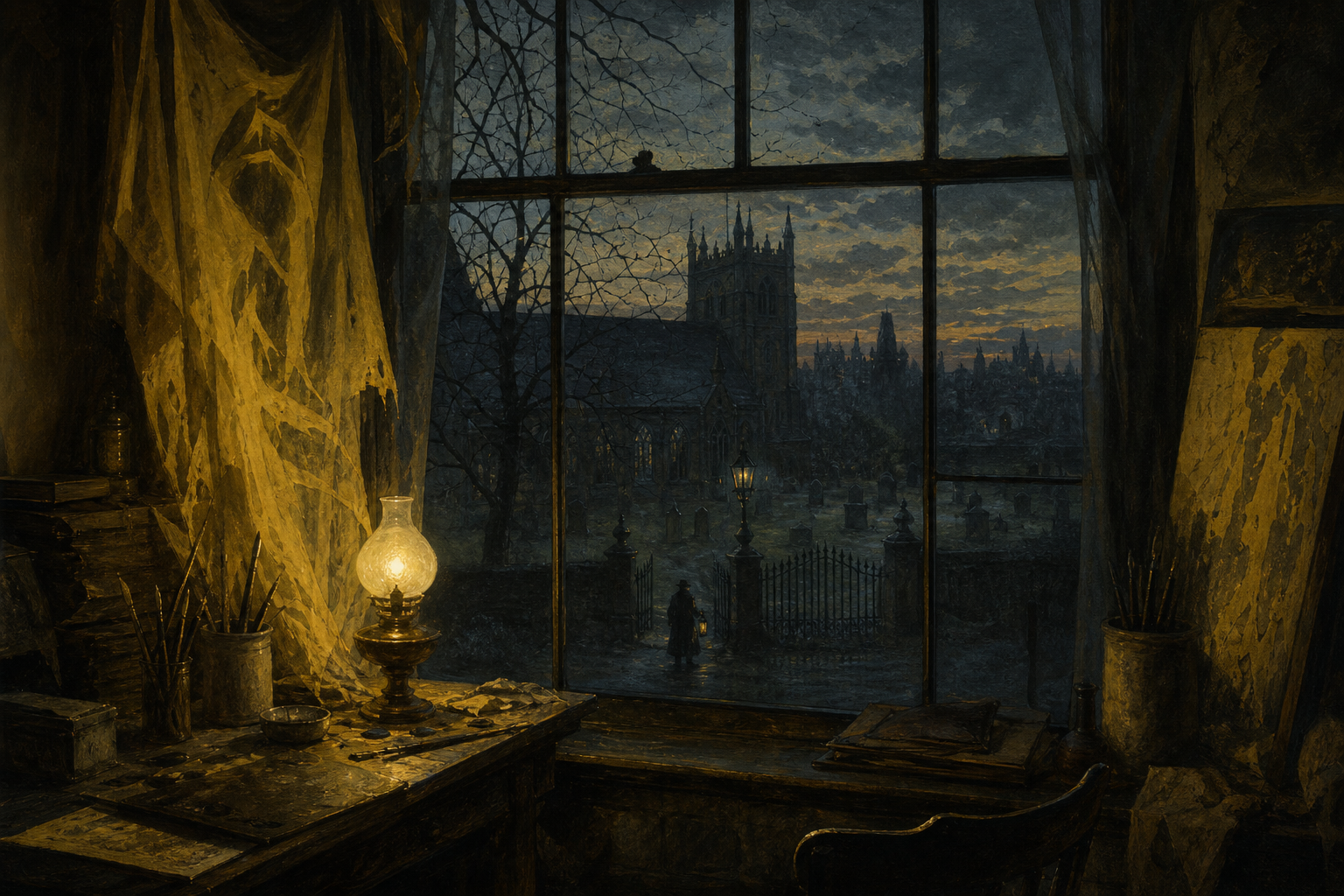
이 자료의 목표
『노란 왕』은 줄거리 암기보다 해석 방식이 중요합니다. 시험에서는 "무서운 희곡이 나온다"에서 멈추면 약합니다. 금지된 텍스트가 왜 직접 보이지 않는지, 불신뢰 화자가 어떻게 세계를 해석하는지, 노란 표식과 카르코사가 왜 설명되지 않을수록 강해지는지를 말해야 합니다.
이 자료는 다음 능력을 연습합니다.
- cursed play, Yellow Sign, Carcosa, Pallid Mask를 영어로 설명하기
- unreliable narrator와 ambiguity를 답안에서 안전하게 다루기
- 짧은 원문 구절을 근거로 diction, imagery, symbol, setting 분석하기
- AP Lit 스타일 thesis와 paragraph 방향 만들기
- SAT Reading 스타일 추론, 기능, 어휘, tone 문제에 익숙해지기
1. Quick Review
- Original title: The King in Yellow
- Author: Robert W. Chambers
- Published: 1895
- Form: short-story collection
- Source text: Project Gutenberg eBook #8492
- Core stories: "The Repairer of Reputations," "The Mask," "In the Court of the Dragon," "The Yellow Sign"
- Key motifs: the cursed play, Carcosa, the Yellow Sign, the Pallid Mask, Hastur, the Hyades, Lake Hali, artists' studios, thresholds
- Exam focus: unreliable narration, symbolism, embedded text, repetition, decadent art, urban Gothic setting, genre shift across a collection
한 문장 요약은 이렇게 정리할 수 있습니다.
Robert W. Chambers' collection imagines art as a force that can infect perception, turning modern streets, studios, churches, and romances toward the forbidden world of Carcosa.
2. 시험용 구조
Opening frame: the cursed play
앞의 네 작품은 책 속의 희곡 The King in Yellow로 연결됩니다. 희곡의 전문은 거의 보이지 않고, 독자는 파편과 결과만 봅니다. 바로 이 부재가 공포를 키웁니다.
Political nightmare: "The Repairer of Reputations"
힐드레드 캐스테인은 군사화되고 질서정연한 미래 뉴욕을 설명합니다. 그러나 그의 왕위 계승 망상은 치명실, 국가 권력, 평판 조작과 연결되며 개인적 광기와 사회적 폭력이 겹칩니다.
Artist tragedy: "The Mask"
보리스의 대리석 용액은 생명을 예술품으로 고정합니다. 알렉의 숨은 사랑은 가면이 심리적 자기기만이 될 수 있음을 보여 줍니다.
Perception under pursuit: "In the Court of the Dragon"
금지된 희곡을 읽은 뒤 화자는 성당의 오르간 음악과 건축 공간에서 추격을 느낍니다. 예술은 더 이상 감상의 대상이 아니라 위협의 통로가 됩니다.
Symbol and death: "The Yellow Sign"
잭과 테시는 노란 표식, 금지된 책, 교회 묘지 문지기와 연결됩니다. 표식은 해독되는 기호라기보다 사람을 이미 붙잡은 힘입니다.
Later stories: romance, Paris, and the artist world
뒤의 이야기들은 로맨스, 산문시, 보헤미안 예술가의 삶으로 이동합니다. 이 변화는 단편집을 약하게 만들기보다, 공포가 자라난 예술가 세계를 넓게 보여 줍니다.
3. 핵심 원문 구절 읽기
아래 구절은 Project Gutenberg 원문을 기준으로 골랐습니다. 먼저 장면을 확인하고, 그다음 단어 선택과 이미지가 어떤 의미를 만드는지 보세요.
Passage 1: Black stars over Carcosa
Strange is the night where black stars rise, And strange moons circle through the skies.
맥락: 카실다의 노래에 나오는 구절입니다. 책이 본격적으로 시작되기 전에 카르코사의 우주적 분위기를 먼저 보여 줍니다.
읽는 법: strange, black stars, strange moons는 익숙한 밤하늘 이미지를 뒤집습니다. 별과 달은 원래 길잡이와 아름다움의 이미지지만, 여기서는 방향 감각을 깨뜨립니다.
Essay use: Use it to argue that Chambers creates dread through suggestive fragments rather than full explanation.
Passage 2: The first act and the delayed blow
The very banality and innocence of the first act only allowed the blow to fall afterward with more awful effect.
맥락: 힐드레드가 금지된 희곡의 위험을 설명하는 부분입니다.
읽는 법: banality, innocence는 안전한 첫인상을 만들고, blow는 독서를 폭력적 충격으로 바꿉니다. 공포는 처음부터 폭발하지 않고, 신뢰를 만든 뒤 무너뜨립니다.
Essay use: Use it for art as contagion, delayed revelation, and the danger of aesthetic trust.
Passage 3: No known standard
It could not be judged by any known standard.
맥락: 희곡이 사회적으로 어떻게 받아들여졌는지 설명하는 문장입니다.
읽는 법: known standard는 기존의 법, 도덕, 예술 기준을 뜻합니다. 이 희곡은 그 기준으로 분류되지 않기 때문에 더 위험하게 느껴집니다.
Essay use: Use it to discuss weird fiction as a genre of category failure.
Passage 4: Hildred's imperial fantasy
The time had come, the people should know the son of Hastur, and the whole world bow to the black stars which hang in the sky over Carcosa.
맥락: 힐드레드와 와일드가 비밀 왕조의 도래를 상상하는 대목입니다.
읽는 법: the people should know는 정치적 선포처럼 들리고, son of Hastur, black stars, Carcosa는 초자연적 망상으로 확장됩니다. 공적 언어와 광기가 같은 문장 안에 있습니다.
Essay use: Use it to show how Chambers blends political paranoia with supernatural symbolism.
Passage 5: The mask of self-deception
The mask of self-deception was no longer a mask for me, it was a part of me.
맥락: 「가면」에서 알렉이 자기 마음을 속여 온 상태를 설명합니다.
읽는 법: 가면은 원래 얼굴을 덮는 물건입니다. 그런데 이 문장에서는 가면이 자아의 일부가 됩니다. 숨김이 오래되면 정체성이 된다는 뜻입니다.
Essay use: Use it to connect the Pallid Mask motif to ordinary emotional denial.
Passage 6: Something being hunted
I felt that in the labyrinth of sounds now issuing from that instrument there was something being hunted.
맥락: 「용의 궁정에서」의 화자가 성당 오르간 음악을 들으며 느끼는 감각입니다.
읽는 법: labyrinth는 소리를 공간으로 만들고, hunted는 음악을 추격으로 만듭니다. 예술 감상이 공포 체험으로 바뀌는 순간입니다.
Essay use: Use it to analyze synesthetic imagery and the collapse between art and threat.
Passage 7: The Yellow Sign question
Have you found the Yellow Sign?
맥락: 「노란 표식」에서 교회 묘지 문지기의 중얼거림이 화자의 머릿속에 반복됩니다.
읽는 법: 이 질문은 표식이 이미 존재하며, 듣는 사람이 그 표식과 관련될 수 있다고 전제합니다. 암호, 고발, 소환처럼 동시에 들립니다.
Essay use: Use it for symbol, repetition, and the way dread enters ordinary speech.
Passage 8: The tattered mantle
I knew that the King in Yellow had opened his tattered mantle and there was only God to cry to now.
맥락: 「노란 표식」 결말에서 화자가 죽음과 영적 공포를 함께 느끼는 순간입니다.
읽는 법: mantle은 왕권의 이미지이고, tattered는 낡고 찢긴 몰락의 이미지입니다. 왕은 위엄과 부패를 동시에 지닌 존재가 됩니다.
Essay use: Use it for endings, religious language, and the point where symbol becomes judgment.
4. Close Reading: 애매함을 논증으로 바꾸기
『노란 왕』 close reading의 핵심은 애매함을 그냥 "모호하다"로 끝내지 않는 것입니다. 심리적 설명과 초자연적 설명이 동시에 가능할 때, 그 둘이 왜 함께 유지되는지 말해야 합니다. 체임버스의 문장은 사건을 확정하기보다 독자의 해석 습관을 흔듭니다. 그래서 좋은 답안은 "무슨 일이 일어났는가"보다 "서술이 어떤 증거를 주고 어떤 증거를 숨기는가"를 먼저 묻습니다.
- 이 구절이 이야기 속 현실인지, 금지된 희곡의 조각인지, 화자의 기억인지 먼저 확인합니다.
mask,sign,strange,Carcosa,banality,hunted,reputation처럼 반복되는 단어를 표시합니다.- 평범한 공간이 어떻게 변하는지 봅니다. 스튜디오, 성당, 거리, 침실, 정부 광장, 책장이 모두 문턱이 될 수 있습니다.
- 심리적 해석과 초자연적 해석을 나란히 놓고, 작품이 왜 하나만 선택하지 않는지 설명합니다.
- 마지막 문장은 "어떤 장치가 어떤 의미를 만든다"의 형태로 정리합니다.
Worked example:
In "I felt that in the labyrinth of sounds now issuing from that instrument there was something being hunted," Chambers turns organ music into Gothic space. The word "labyrinth" makes sound architectural, while "hunted" makes fear active before the pursuer fully appears.
이 예시를 논술에 쓸 때는 인용문의 명사와 동사를 나누어 보세요. labyrinth는 음악을 보이지 않는 건축물로 만들고, hunted는 아직 확인되지 않은 위협을 이미 행동하는 힘으로 바꿉니다. 따라서 공포는 괴물이 등장해서 생기는 것이 아니라, 감각이 공간화되고 추격의 문법을 얻는 순간 생긴다고 말할 수 있습니다.
SAT식 독해에서는 같은 구절이 "tone"이나 "function" 문제로 나올 수 있습니다. 정답은 대개 단순한 줄거리 요약이 아니라, 장면의 평범한 감각이 어떻게 압박감으로 전환되는지를 설명하는 선택지입니다. AP식 essay에서는 더 넓게 연결해야 합니다. 성당의 오르간 소리, 화실의 가면, 책 속의 희곡, 노란 표식은 모두 예술이 현실의 배경이 아니라 현실을 재배열하는 힘으로 작동한다는 증거가 됩니다.
문단을 쓸 때는 한 문장 안에 두 층위를 함께 넣는 것이 좋습니다. 예를 들어 "체임버스는 오르간 음악을 labyrinth로 비유해 청각을 공간으로 바꾸고, 그 공간 안에서 무엇인가가 hunted된다고 말함으로써 화자의 불안을 개인 심리에서 도시적 고딕 질서로 확장한다"처럼 쓰면 됩니다. 이 방식은 작품의 애매함을 피하지 않고, 애매함 자체가 의미를 생산한다는 논지로 바꿉니다.
5. Literary Devices: 노란 왕에서 바로 쓰는 장치
Embedded fictional text
금지된 희곡은 이야기 안에 있지만 전문은 거의 보이지 않습니다. 부재가 설명보다 더 큰 공포를 만드는 장치입니다. 독자는 희곡의 내용을 충분히 알 수 없기 때문에, 인물들이 보이는 반응을 통해 그 힘을 추론해야 합니다. 이 장치는 작품 전체를 "텍스트를 읽는 행위"에 관한 이야기로 만듭니다. 누가 무엇을 읽었는지, 무엇을 읽지 말아야 했는지, 읽은 뒤 현실을 어떻게 다르게 보는지가 핵심입니다.
Unreliable narration
힐드레드의 문장은 차분하지만 판단은 무너져 있습니다. 불신뢰 화자를 쓸 때는 "거짓말"보다 "그가 왜 자기 체계를 믿는가"를 설명해야 합니다. 「명예 수선공」에서 화자는 미래 정치와 개인적 복수 계획을 행정 문서처럼 정리합니다. 바로 그 질서정연함 때문에 광기는 더 설득력 있는 표면을 얻습니다. 좋은 분석은 화자의 오류를 비웃지 않고, 그의 문체가 어떻게 오류를 제도적 확신처럼 보이게 하는지 짚어야 합니다.
Repetition
Have you found the Yellow Sign?은 반복될수록 정보가 아니라 강박처럼 들립니다. 반복은 언어를 감염의 도구로 만듭니다. 같은 질문이 다시 나타날 때마다 독자는 새 사실을 얻기보다 이미 피할 수 없는 궤도 안에 들어왔다는 느낌을 받습니다. 반복은 고딕 소설의 예고 기능도 합니다. 문장이 돌아올수록 사건은 우연이 아니라 의식, 저주, 혹은 독서가 만든 필연처럼 보입니다.
Symbolism
노란 표식, 창백한 가면, 검은 별, 할리 호수는 단순한 해답표가 아닙니다. 불완전하게 설명되기 때문에 더 큰 압력을 만듭니다. 상징을 분석할 때는 "이것은 무엇을 뜻한다"로만 끝내면 약합니다. 더 좋은 답은 상징이 인물의 행동을 어떻게 바꾸는지, 그리고 독자에게 어떤 해석 불안을 남기는지를 함께 말합니다. 『노란 왕』에서 상징은 뜻을 전달하는 표지가 아니라, 뜻을 너무 많이 암시해서 판단을 마비시키는 장치입니다.
Urban Gothic
워싱턴 스퀘어, 파리의 성당, 화실, 아파트가 모두 고딕 공간이 됩니다. 체임버스는 성이 아니라 도시에서 공포를 만듭니다. 낡은 성, 무덤, 외딴 황야 대신 근대 도시의 방과 거리와 공공 제도가 무대가 되기 때문에, 공포는 과거의 잔재가 아니라 현대 생활의 표면 아래에 있는 균열로 보입니다. 이 점은 『노란 왕』을 포 이후의 심리 공포와 러브크래프트 이전의 우주적 공포 사이에 놓이게 합니다.
Genre shift
후반부의 파리 보헤미안 이야기들은 앞부분의 공포를 그대로 반복하지 않습니다. 그러나 이 장르 변화는 약점만은 아닙니다. 독자는 전반부에서 예술이 현실을 오염시키는 방식을 본 뒤, 후반부에서 예술가들의 일상과 욕망을 더 불안하게 읽게 됩니다. 시험 답안에서는 이 변화를 "분열"로만 보지 말고, 체임버스가 미학적 삶의 매혹과 위험을 서로 다른 장르로 나누어 실험한다고 설명할 수 있습니다.
6. 인물 분석을 영어 답안으로 바꾸기
Hildred Castaigne
unreliable narrator and political fantasist
힐드레드는 가족 질투를 제국의 운명으로 바꿉니다. 그의 문체는 정돈되어 있지만, 해석은 위험하게 무너져 있습니다.
Essay sentence: Hildred's narration shows how a delusional system becomes persuasive when private ambition borrows the language of public order.
Mr. Wilde
grotesque archivist of reputation
와일드는 평판과 비밀을 권력으로 바꿉니다. 그는 힐드레드의 환상에 문서와 명단이라는 형식을 줍니다.
Essay sentence: Mr. Wilde makes madness look bureaucratic, suggesting that reputations can be repaired only by deeper corruption.
Alec
artist-lover behind a psychological mask
알렉은 제네비에브를 사랑하지만 우정과 충성심 뒤에 숨습니다. 그의 가면은 무대 장치가 아니라 심리적 습관입니다.
Essay sentence: Alec's "mask of self-deception" turns the collection's theatrical motif into a study of emotional repression.
The Dragon narrator
reader pursued through perception
이 화자는 음악과 성당, 통로와 빛을 모두 추격의 신호로 읽습니다.
Essay sentence: The Dragon narrator shows that the cursed play's real danger is perceptual: after reading it, every form of art can become a passageway.
Tessie
innocent finder of the fatal sign
테시는 작은 장식품을 통해 우주적 공포를 작업실로 들여옵니다. 그녀의 호기심과 애정은 비극의 통로가 됩니다.
Essay sentence: Tessie's role makes the Yellow Sign terrifyingly domestic, showing how cosmic dread can enter through ordinary gifts and intimate trust.
7. 주제별 Thesis 만들기
Art
Aesthetic Contagion
Weak: The play is scary.
Strong: Chambers presents art as contagious by showing that the unseen play changes perception, language, and behavior before characters can explain its meaning.
Mask
Performance and Identity
Weak: Masks are important.
Strong: Chambers uses masks to connect theatrical disguise with psychological self-deception, making identity feel performed and unstable.
City
Modern Gothic Space
Weak: The settings are creepy.
Strong: Chambers turns modern spaces such as Washington Square, Paris churches, and artists' studios into Gothic thresholds where rational urban life opens toward Carcosa.
Power
Delusion and Public Order
Weak: Hildred is insane.
Strong: "The Repairer of Reputations" is disturbing because Hildred's delusion echoes the story's authoritarian public world, blurring private madness and civic violence.
8. SAT Reading Sample
아래 문제는 공식 College Board 문제가 아니라, 작품 원문과 시험 유형을 바탕으로 만든 SAT Reading 스타일 연습문제입니다. 질문, 보기, Answer: X. 표기는 영어로 두고, 해설은 한국어로 정리했습니다.
Question 1
The phrase "black stars" most strongly contributes to a mood of:
- A. ordinary nightfall
- B. comic exaggeration
- C. cosmic disorientation
- D. patriotic ceremony
Answer: C. 별은 보통 길잡이나 아름다움을 떠올리게 하지만, 검은 별이라는 표현은 그 기대를 뒤집어 우주 자체가 낯설어진 느낌을 만듭니다. 다른 보기는 이 불안한 전복을 충분히 설명하지 못합니다.
Question 2
In the description of the play's first act, "banality and innocence" mainly serve to:
- A. make the later shock more violent
- B. prove the play is morally harmless
- C. show that Hildred dislikes theater
- D. describe a comic subplot
Answer: A. 첫 막이 평범하고 순진해 보이기 때문에 뒤의 충격이 더 크게 떨어집니다. 작품 전체가 안전하다는 뜻이 아니며, 희극적 부속 줄거리나 힐드레드의 취향을 설명하는 표현도 아닙니다.
Question 3
When Hildred says the play "could not be judged by any known standard," the phrase suggests:
- A. a printing error
- B. a familiar legal category
- C. an ordinary theater review
- D. a failure of existing categories
Answer: D. 이 문장은 기존의 도덕, 법, 예술 기준으로 희곡을 분류할 수 없다는 뜻입니다. 인쇄 실수나 평범한 공연평이 아니라, 판단 체계 자체의 실패가 핵심입니다.
Question 4
Hildred's claim that "the whole world" will bow to Carcosa primarily reveals:
- A. modest private grief
- B. delusions of political and cosmic importance
- C. comic social embarrassment
- D. a realistic election plan
Answer: B. 힐드레드는 정치적 선포와 우주적 이미지를 섞어 자신이 세계적 왕권의 중심이라고 믿습니다. 사적인 슬픔이나 현실적 선거 계획으로는 설명되지 않습니다.
Question 5
In "The mask of self-deception was no longer a mask for me," the mask becomes:
- A. a literal stage prop only
- B. a legal document
- C. part of the speaker's identity
- D. proof of supernatural death
Answer: C. 알렉은 자기기만이 단순한 위장이 아니라 자기 일부가 되었다고 말합니다. 무대 소품이나 법적 문서가 아니라, 오래된 숨김이 정체성으로 굳어진 상태입니다.
Question 6
The "labyrinth of sounds" image in "In the Court of the Dragon" turns music into:
- A. a financial exchange
- B. a family memory
- C. a patriotic march
- D. a space of pursuit
Answer: D. 미로라는 이미지는 소리를 공간처럼 만들고, 사냥당한다는 표현은 그 공간을 추격의 장으로 바꿉니다. 돈, 가족 기억, 애국 행진과는 장면의 긴장이 맞지 않습니다.
Question 7
"Have you found the Yellow Sign?" is unsettling mainly because it:
- A. assumes the listener may already be implicated
- B. explains the symbol completely
- C. changes the scene to comedy
- D. identifies a normal street address
Answer: A. 이 질문은 듣는 사람이 이미 표식과 관련되어 있을 수 있다고 전제합니다. 표식을 설명해 주지 않고 오히려 더 불확실하게 만들기 때문에 불안합니다.
Question 8
The "tattered mantle" of the King suggests royalty mixed with:
- A. athletic triumph
- B. domestic comfort
- C. decay and ruin
- D. scientific accuracy
Answer: C. 망토는 왕권을 떠올리게 하지만, 찢겨 있다는 표현이 몰락과 부패를 더합니다. 왕의 위엄과 폐허성이 동시에 생깁니다.
Question 9
The Lethal Chamber in "The Repairer of Reputations" helps create horror by:
- A. placing state violence inside civic normality
- B. proving New York is medieval
- C. showing Hildred is a reliable historian
- D. removing all political meaning
Answer: A. 치명실은 공공시설처럼 묘사되며 죽음을 행정적 질서 안에 넣습니다. 이 정상화된 폭력이 작품 초반의 불편함을 만듭니다.
Question 10
The later Paris stories are important to the collection because they:
- A. repeat the same cursed-book plot exactly
- B. erase the artist theme
- C. prove the first four stories are unrelated
- D. widen the book's study of art, love, and performance
Answer: D. 후반부는 금서 플롯을 그대로 반복하지 않지만, 예술가의 삶과 사랑, 연기, 자기기만이라는 주제를 넓힙니다. 그래서 앞의 공포와 연결됩니다.
Question 11
Which detail best supports an interpretation of the Yellow Sign as a symbol of contagion?
- A. Tessie finds and gives the clasp before fully understanding it
- B. Boris works as a sculptor
- C. Paris contains many studios
- D. The book was published in 1895
Answer: A. 테시는 표식의 의미를 모른 채 장식품을 주고, 그 물건은 관계와 공간을 통해 영향을 퍼뜨립니다. 감염이라는 해석에는 이 이동 방식이 가장 직접적인 근거입니다.
Question 12
The withheld contents of the fictional play mainly create:
- A. suspense through absence
- B. a complete plot summary
- C. certainty about every event
- D. historical realism only
Answer: A. 체임버스는 희곡의 전문을 보여 주지 않고 파편과 결과만 제시합니다. 이 부재가 독자의 상상력을 움직여 더 큰 공포를 만듭니다.
Question 13
The organist in "In the Court of the Dragon" functions most like:
- A. a comic servant
- B. a pursuer shaped by the narrator's altered perception
- C. a neutral music teacher
- D. an ordinary tour guide
Answer: B. 오르간 연주자는 실제 존재인지 심리적 환영인지 확정되지 않지만, 금지된 희곡 이후 변한 인식 속에서 추격자의 형상을 맡습니다.
Question 14
The phrase "repairer of reputations" is ironic because Wilde:
- A. repairs clocks
- B. avoids all secrets
- C. turns social reputation into manipulation and corruption
- D. teaches public speaking
Answer: C. 평판을 고친다는 말은 품위 있어 보이지만, 와일드의 힘은 비밀, 파일, 협박, 망상에 기대고 있습니다. 그래서 제목 자체가 아이러니합니다.
Question 15
The marble transformation in "The Mask" connects art with:
- A. permanent warmth
- B. living feeling made beautiful but cold
- C. political elections
- D. comic disguise
Answer: B. 살아 있는 것이 대리석처럼 굳는 장면은 아름다움과 차가움, 보존과 죽음의 경계를 겹칩니다. 예술은 따뜻한 생명과 동시에 위험한 정지를 뜻합니다.
Question 16
The best description of Chambers' use of Carcosa is that it:
- A. operates as a fully explained map
- B. appears only as a realistic city
- C. has no symbolic importance
- D. pressures reality through fragments and repeated names
Answer: D. 카르코사는 완전한 지도로 설명되지 않습니다. 노래, 이름, 이미지가 반복되며 현실을 누르는 분위기와 세계감을 만듭니다.
Question 17
In exam writing, reducing Hildred's story to "he is insane" would be weak because:
- A. it ignores the story's political setting and supernatural suggestions
- B. Hildred never narrates
- C. the story has no social world
- D. the Yellow Sign is fully explained
Answer: A. 힐드레드의 불신뢰성은 중요하지만, 치명실과 국가 질서, 와일드, 금지된 희곡이 함께 작동합니다. 단순한 정신 이상으로만 보면 작품의 정치성과 초자연적 암시가 사라집니다.
Question 18
The repeated artist settings help Chambers explore:
- A. agriculture
- B. courtroom procedure
- C. the risks of turning life into aesthetic pose
- D. military tactics only
Answer: C. 스튜디오, 모델, 조각, 보헤미안 생활은 삶을 예술적 구도로 바꾸는 습관을 보여 줍니다. 그 습관은 아름답지만 현실을 가릴 위험도 있습니다.
Question 19
The most defensible theme statement for the collection is:
- A. Every artist becomes wealthy
- B. Forbidden art can alter perception and expose unstable identities
- C. All symbols are easy to decode
- D. The later stories cancel the first four stories
Answer: B. 금지된 예술이 인식과 정체성을 흔든다는 해석은 희곡, 표식, 가면, 예술가 세계를 모두 포괄합니다. 나머지 보기는 작품 근거와 맞지 않습니다.
Question 20
The ending of "The Yellow Sign" is best described as:
- A. a public newspaper report
- B. a simple romantic reunion
- C. a comic misunderstanding
- D. a private confession framed by death and spiritual fear
Answer: D. 잭은 죽어 가며 쓰고 있고, 테시는 죽었으며, 사제가 곁에 있습니다. 결말은 대중적 사건 보도가 아니라 죽음과 영적 두려움 속의 고백입니다.
9. AP Lit Essay Questions
아래 문항은 구체적 장면을 thesis, outline, textual evidence, commentary로 바꾸는 AP Lit 스타일 연습 질문입니다.
Essay Question 1
Analyze how Chambers uses the fictional play The King in Yellow to make absence more frightening than direct explanation. Use at least two stories as evidence.
Essay Question 2
In "The Repairer of Reputations," explain how Hildred's private delusion reflects or distorts the story's public political world.
Essay Question 3
Discuss the role of unreliable narration in the collection. How does Chambers make readers judge events that may be psychological, supernatural, or both?
Essay Question 4
Choose one recurring symbol, such as the Yellow Sign, the Pallid Mask, black stars, or Lake Hali. Analyze how repetition gives that symbol power.
Essay Question 5
Analyze how "The Mask" connects artistic beauty with emotional concealment, preservation, or paralysis.
Essay Question 6
In "In the Court of the Dragon," explain how music and architecture become instruments of pursuit.
Essay Question 7
Compare the use of urban space in "The Repairer of Reputations" and "The Yellow Sign." How do ordinary New York settings become Gothic?
Essay Question 8
Analyze how Chambers uses questions, fragments, and quoted songs to imply a larger mythology without explaining it fully.
Essay Question 9
Discuss how the collection treats art as both beautiful and dangerous. Use one Yellow Mythos story and one later Paris story.
Essay Question 10
How does the motif of the mask move between theater, psychology, and social performance?
Essay Question 11
Analyze the function of the Lethal Chamber in the opening story. How does civic order become part of the horror?
Essay Question 12
Choose a character who misreads reality. Explain how Chambers makes that misreading persuasive, dangerous, or emotionally revealing.
Essay Question 13
Discuss the genre shift after "The Yellow Sign." Does the movement toward romance and bohemian realism weaken or deepen the collection's design?
Essay Question 14
Analyze how Chambers uses thresholds: doors, windows, streets, courts, churches, studios, and books.
Essay Question 15
Compare Hildred Castaigne's ambition with Alec's self-deception. How do different forms of fantasy shape identity?
Essay Question 16
Explain how the collection uses repetition to make language feel compulsive rather than merely descriptive.
Essay Question 17
Analyze the relationship between beauty and death in two stories from the collection.
Essay Question 18
How does Chambers adapt Gothic conventions to modern urban and artistic environments?
Essay Question 19
Discuss how the collection's incomplete mythology invites readers to participate in its dread.
Essay Question 20
Analyze The King in Yellow as a collection about the danger of living too close to art, performance, and imagined worlds.
10. Model Thesis Bank
- Chambers makes the fictional play frightening by withholding its full contents, allowing fragments, rumors, and consequences to suggest a horror larger than direct quotation.
- "The Repairer of Reputations" links Hildred's delusion to public authoritarian order, showing that private madness becomes more disturbing when it echoes civic violence.
- The collection's unreliable narrators force readers to hold psychological and supernatural explanations together, which is the central tension of its weird-fiction method.
- The Yellow Sign gains power because it functions less as a decoded symbol than as a contagious mark of recognition.
- In "The Mask," Chambers turns aesthetic preservation into emotional danger by making living feeling beautiful, cold, and almost impossible to separate from self-deception.
- "In the Court of the Dragon" transforms music and architecture into pursuit, showing how the cursed play changes ordinary perception into Gothic experience.
- Chambers modernizes Gothic horror by making Washington Square, Paris studios, and church interiors feel as vulnerable to nightmare as castles or ruins.
- Cassilda's Song and other fragments imply a mythology whose incompleteness makes Carcosa more powerful than a fully explained setting.
- The collection treats art as dangerous not because beauty is false, but because beauty can bypass judgment and reorganize desire.
- The mask motif links theatrical disguise with psychological repression, suggesting that performed identities can become inseparable from the self.
- The Lethal Chamber makes horror civic rather than hidden, exposing a society that has made death look orderly and progressive.
- Chambers makes misreading dangerous by giving characters interpretive systems that are coherent enough to guide destructive action.
- The later Paris stories deepen the collection by showing the ordinary artist world whose poses, longings, and self-deceptions the horror stories intensify.
- Thresholds in the collection turn everyday movement into metaphysical risk, as doors, windows, streets, and books open toward hidden realities.
- Hildred's imperial fantasy and Alec's emotional repression show two forms of self-deception: one grandiose and political, the other intimate and aesthetic.
- Repeated phrases such as "Have you found the Yellow Sign?" make language feel infectious, as if speech itself can transmit dread.
- Chambers repeatedly connects beauty with death, especially through marble, masks, and the ruined majesty of the King.
- The collection adapts Gothic conventions to modernity by replacing remote castles with cities, studios, state institutions, and nervous readers.
- Carcosa works as an incomplete mythology, inviting readers to imagine the missing structure and thereby participate in the fear.
- The King in Yellow warns that art, performance, and fantasy become dangerous when they stop representing life and begin replacing it.
11. Academic Vocabulary for Essays
- weird fiction: 불확실성, 분류 불가능성, 알 수 없는 힘과의 접촉으로 공포를 만드는 문학 양식
- unreliable narration: 편견, 망상, 자기방어, 제한된 시야가 섞인 서술
- embedded text: 작품 안에 들어 있는 또 다른 텍스트
- motif: 반복되는 이미지, 문장, 사물, 생각
- symbol: 문자 그대로의 기능을 넘어 의미를 지니는 사물이나 이미지
- decadence: 아름다움, 인공성, 피로, 도덕적 불안을 강조한 19세기 말 분위기
- urban Gothic: 성이나 폐허 대신 현대 도시에서 만들어지는 고딕 효과
- contagion: 영향, 공포, 언어, 부패가 사람이나 사물을 통해 퍼지는 방식
- ambiguity: 작품이 일부러 남겨 두는 의미 있는 불확실성
- threshold: 문, 창, 통로, 책처럼 다른 상태로 넘어가는 경계
- aestheticism: 아름다움과 예술 경험을 중시하는 태도
- paranoia: 숨은 체계와 위협을 과도하게 읽는 해석 방식
- cosmic horror: 인간 이해를 넘어서는 거대한 힘을 암시하는 공포
- thesis: 문학 장치와 의미를 연결하는 방어 가능한 주장