카라마조프가의 형제들 학습자료 - AP English, SAT Reading, 미국식 문학 에세이
영어 원문을 근거로 AP English Literature, SAT Reading, IB English, 미국 학교 에세이까지 연결하는 실전 학습 가이드입니다.
이 학습자료는 미국식 문학 수업과 영어 에세이 작성을 목표로 합니다. 작품 전체 흐름을 먼저 잡고 싶다면 본문 해설을 먼저 읽어도 좋습니다.
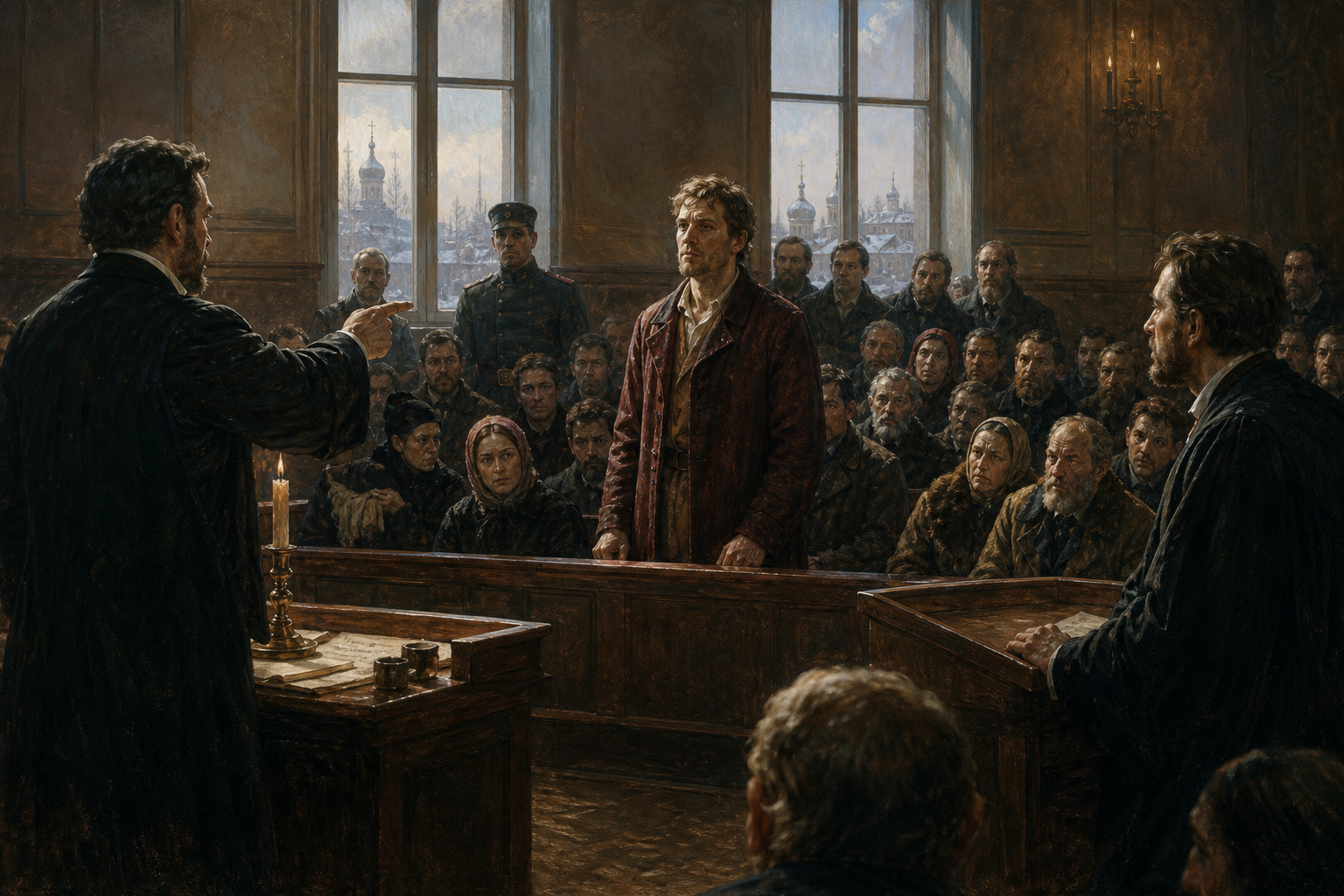
이 자료의 목표
한국어로 설명하지만, 실제 시험과 수업에서 필요한 핵심 문장과 개념은 영어로 익히는 방식입니다. AP English Literature, IB English, SAT Reading에서는 "드미트리가 범인인가"만 묻지 않습니다. 누가 말하는가, 어떤 단어가 장면의 윤리적 압박을 만드는가, 한 인물의 사상이 다른 인물의 행동으로 어떻게 옮겨 가는가를 묻습니다.
이 자료는 다음 능력을 연습합니다.
- Dmitri, Ivan, Alyosha, Smerdyakov의 기능을 영어 문장으로 설명하기
- self-deception, active love, freedom, responsibility 같은 핵심 개념을 작품 근거와 연결하기
- 짧은 영어 원문을 close reading하여 thesis로 바꾸기
- Grand Inquisitor 장면을 종교 논쟁뿐 아니라 자유와 권위의 문제로 읽기
- SAT Reading 스타일 추론, 기능, 단어 의미, 구조 문제에 익숙해지기
1. Quick Review
- Original title: The Brothers Karamazov
- Author: Fyodor Dostoyevsky
- Published: serialized 1879-1880; book publication 1880
- Source used here: Project Gutenberg eBook #28054, Constance Garnett translation
- Main settings: a provincial Russian town, Fyodor's house, the monastery, Grushenka's circle, the courtroom
- Central conflict: Fyodor Pavlovich is murdered, Dmitri is convicted, and the family must confront guilt beyond legal fact
- Core themes: faith, doubt, free will, active love, family corruption, sensuality, resentment, responsibility
- Common exam angles: Grand Inquisitor, Ivan and Smerdyakov, Zosima's teaching, Dmitri's trial, Alyosha and the schoolboys
한 문장 요약은 이렇게 정리할 수 있습니다.
A corrupt father is murdered, but Dostoyevsky uses the trial of Dmitri Karamazov to examine whether guilt belongs only to the person who acts or also to the people, ideas, and failures that make action possible.
2. 시험용 줄거리 구조
Exposition
표도르 파블로비치 카라마조프는 가족을 망가뜨린 아버지로 소개됩니다. 드미트리, 이반, 알료샤는 각각 열정, 지성, 믿음이라는 서로 다른 방향에서 같은 가족의 상처로 돌아옵니다.
Rising Action
수도원 만남은 실패하고, 드미트리의 돈 문제와 질투는 커지며, 이반은 아이들의 고통을 중심으로 신의 세계를 거부합니다. 스메르쟈코프는 가족의 말과 약점을 조용히 듣고, 주변부에서 사건을 준비합니다.
Philosophical Center
이반의 「대심문관」은 인간이 자유를 감당할 수 있는가를 묻습니다. 조시마의 가르침은 다른 방향에서 응답합니다. 책임은 추상적 연민이 아니라 행동으로 하는 사랑이 되어야 합니다.
Crisis
표도르가 살해되고, 정황은 드미트리를 향합니다. 그러나 스메르쟈코프는 이반에게 자신이 범인이라고 고백합니다. 이반은 자기 사상이 타인의 행동으로 바뀔 수 있다는 사실을 마주합니다.
Trial and Resolution
드미트리는 유죄 판결을 받고, 이반은 무너지고, 스메르쟈코프는 자살합니다. 알료샤는 법정의 판결보다 살아 있는 아이들 곁에 남아, 일류샤의 기억을 통해 공동체의 가능성을 붙잡습니다.
시험 답안에서는 "드미트리는 무죄다" 또는 "믿음이 의심을 이긴다"에서 멈추면 약합니다. 더 좋은 답안은 법적 증거, 심리적 동기, 사상의 영향, 영적 책임이 서로 어떻게 다른지 설명합니다.
3. 핵심 원문 구절 읽기
이 구간의 Passage들은 외울 만한 명문장을 나열한 것이 아닙니다. 각 문장은 speaker, situation, diction, syntax, image, theme을 함께 읽는 연습용 자료입니다. 『카라마조프가의 형제들』에서는 짧은 문장 하나가 인물의 즉각적인 감정, 철학적 입장, 작품 전체의 책임 윤리를 동시에 품는 경우가 많습니다.
먼저 장면을 확인하세요. 누가 누구에게 말하는지, 그 순간 어떤 압박을 받는지 표시합니다. 다음으로 단어를 봅니다. lie, secret, freedom, love, responsible, heart 같은 단어는 단순한 뜻보다 큰 역할을 합니다. 마지막으로 문장을 claim으로 바꿉니다. 좋은 답안은 "이 문장은 책임을 보여 준다"에서 끝나지 않고, 특정 단어 선택이 책임의 범위를 어떻게 넓히는지 설명합니다.
SAT Reading에서는 function을 특히 보세요. 어떤 문장은 경고하고, 어떤 문장은 고발하며, 어떤 문장은 상대의 생각을 시험합니다. AP/IB 에세이에서는 그 기능을 더 큰 갈등과 연결하세요. 예를 들어 이반과 알료샤의 대립, 드미트리의 공연 같은 자기고백, 조시마의 공동 책임 윤리, 스메르쟈코프가 사상을 행동으로 바꾸는 방식을 함께 써야 합니다.
Passage 1: Don't lie to yourself
Above all, don’t lie to yourself.
맥락: 조시마는 고백과 자기 인식, 그리고 자기 마음을 속이는 위험에 대해 말합니다.
읽는 법: Above all은 자기기만을 가장 먼저 경계해야 할 영적 위험으로 둡니다. 문장은 단순하지만, 작품 안에서는 거의 모든 주요 인물이 자신을 보호하는 거짓 이야기를 갖고 있기 때문에 복잡해집니다.
Essay use: Use this line for self-deception, confession, and the claim that moral failure begins before public action.
Passage 2: The secret of man's being
For the secret of man’s being is not only to live but to have something to live for.
맥락: 대심문관은 인간이 생존만이 아니라 삶의 의미를 필요로 한다고 주장합니다. 그는 이 통찰을 자유를 빼앗는 논리로 사용합니다.
읽는 법: to live와 to have something to live for의 대비가 중요합니다. 대심문관의 말은 인간 심리를 정확히 찌르지만, 그 정확함이 오히려 통제의 도구가 됩니다.
Essay use: Use this passage for freedom, authority, religion, and the psychological force of Ivan's parable.
Passage 3: Love in action
Love in action is a harsh and dreadful thing compared with love in dreams.
맥락: 조시마는 상상 속의 선량함과 실제 사람을 사랑하는 일을 구분합니다.
읽는 법: harsh와 dreadful은 사랑을 감상적인 단어에서 끌어내립니다. 실제 사랑은 지루함, 모욕, 반복, 실패를 견뎌야 하기 때문에 어렵습니다.
Essay use: Use this line for Alyosha, Zosima, Grushenka's onion story, and the final schoolboy scene.
Passage 4: Responsible for all
Every one of us is undoubtedly responsible for all men and everything on earth.
맥락: 조시마는 책임을 법적 유죄보다 훨씬 넓은 영역으로 확장합니다.
읽는 법: Every one, all men, everything은 책임의 범위를 극단적으로 넓힙니다. 이 문장은 죄를 한 사람의 행동 안에만 가두고 싶은 마음을 흔듭니다.
Essay use: Use it to connect Dmitri's trial, Ivan's indirect guilt, Smerdyakov's hidden action, and Alyosha's ethic of community.
Passage 5: Beauty as battlefield
God and the devil are fighting there and the battlefield is the heart of man.
맥락: 드미트리는 아름다움, 욕망, 자기 내부의 분열을 말합니다.
읽는 법: battlefield metaphor는 사적인 욕망을 도덕적 전투로 바꿉니다. 드미트리의 말은 과장되어 있지만, 바로 그 과장이 그의 내면 분열을 보여 줍니다.
Essay use: Use this passage for Dmitri's sensuality, divided will, and the spiritual language of bodily desire.
Passage 6: Everything is lawful
Yes, if you like, “everything is lawful” since the word has been said.
맥락: 살인 사건 이후 이반과 연결된 사상이 반복되고 시험받습니다. 스메르쟈코프는 이 생각을 실제 허락처럼 받아들입니다.
읽는 법: since the word has been said는 말이 결과를 낳는다는 점을 드러냅니다. 상처 입은 집안에서 사상은 추상으로 남지 않고 행동을 가능하게 할 수 있습니다.
Essay use: Use it for Ivan, Smerdyakov, philosophical influence, and the difference between thought and permission.
Passage 7: A good memory
You must know that there is nothing higher and stronger and more wholesome and good for life in the future than some good memory.
맥락: 알료샤는 일류샤의 장례 후 소년들에게 좋은 기억을 붙잡으라고 말합니다.
읽는 법: higher, stronger, wholesome, good의 축적은 기억을 단순한 추억이 아니라 미래의 윤리적 힘으로 만듭니다. 결말은 처벌보다 기억과 공동체를 붙잡습니다.
Essay use: Use it for the ending, childhood, communal healing, and Alyosha's answer to despair.
4. Close Reading: 사건과 사상을 함께 읽기
이 작품의 close reading은 줄거리와 사상을 분리하지 않는 데서 시작합니다. 살인 단서는 동시에 도덕적 시험이고, 철학적 연설은 동시에 인물의 행동입니다. 종교적 가르침도 수도원 안에만 머물지 않고, 아이의 장례식과 하인의 원한과 형제의 붕괴 속에서 다시 나타납니다.
1단계: 말하는 사람의 압박 확인하기
이반은 도덕적 명료함을 원하지만 상처받기 싫어 거리를 둡니다. 드미트리는 고백하고 싶어 하면서도 자신을 극적으로 연출합니다. 조시마는 생각을 행동으로 옮기라고 요구합니다. 스메르쟈코프는 인정받지 못한 자리에서 다른 사람의 말을 자기 복수의 근거로 삼습니다. speaker의 압박을 먼저 잡으면 문장이 단순한 명언이 아니라 장면 안의 행동으로 보입니다.
2단계: 법적 유죄와 도덕적 책임 분리하기
드미트리는 살인죄로 유죄 판결을 받지만, 실제 살인자는 아닐 가능성이 큽니다. 이반은 법적으로 범인이 아니지만, 스메르쟈코프가 그의 말을 어떻게 받아들였는지 때문에 무너집니다. 조시마의 책임 윤리는 이 둘보다 더 넓습니다. 답안에서는 legal guilt, moral responsibility, indirect responsibility를 구분해 쓰면 좋습니다.
3단계: 추상어가 실제 사건으로 바뀌는 지점 찾기
freedom, love, responsibility, faith, lawful 같은 단어는 추상적으로 들립니다. 도스토옙스키는 이 단어들을 돈 봉투, 하인의 방, 공개 재판, 죽어 가는 아이, 장례 후의 약속 같은 실제 장면으로 시험합니다. 좋은 문학 답안은 추상어를 작품의 특정 장면과 연결합니다.
Worked example: Love in action
Love in action is a harsh and dreadful thing compared with love in dreams는 단순히 사랑을 칭찬하는 문장이 아닙니다. action과 dreams의 대비는 사랑을 윤리적 시험으로 만듭니다. 꿈속의 사랑은 나를 좋은 사람처럼 느끼게 하지만, 행동하는 사랑은 시간과 자존심과 인내를 요구합니다.
Essay sentence로 바꾸면 이렇게 쓸 수 있습니다.
Through Zosima's contrast between dreamed love and active love, Dostoyevsky defines goodness as a difficult practice rather than a feeling, preparing readers to see Alyosha's final work with the schoolboys as the novel's real answer to Ivan's despair.
5. Literary Devices: 카라마조프가의 형제들에서 바로 쓰는 장치 8개
이 작품의 장치들은 사건을 장식하지 않습니다. 사상이 장면 안에서 말해지고, 다른 사람이 그 말을 왜곡해서 듣고, 결국 행동과 판결로 돌아옵니다. 장치를 외울 때는 "무엇을 보여 주는가"보다 "어떤 책임 문제를 움직이는가"를 함께 정리하세요.
1. Polyphonic dialogue: 여러 목소리의 충돌
이반, 조시마, 드미트리, 알료샤, 스메르쟈코프, 검사와 변호사는 모두 다른 도덕 언어를 갖습니다. 작품은 한 목소리로 이들을 정리하지 않고, 각 목소리가 실제 힘을 갖게 둡니다. AP 답안에서는 이 구조를 사용해 도스토옙스키가 독자에게 직접 판단을 요구한다고 설명할 수 있습니다.
2. Embedded parable: 대심문관
대심문관 이야기는 본 줄거리에서 잠시 떨어져 나온 듯 보이지만, 사실 자유와 권위라는 작품의 중심을 압축합니다. 이 장면은 인간이 자유를 원하면서도 그 부담을 두려워한다는 심리를 드러냅니다.
3. Courtroom rhetoric: 이야기로서의 증거
재판에서는 같은 사실이 서로 다른 이야기로 구성됩니다. 검사는 드미트리의 삶을 살인의 필연적 과정처럼 만들고, 변호사는 그의 과장된 말과 실제 행동을 분리하려 합니다. 법정 장면은 진실이 아니라 설득력 있는 서사가 판결을 움직일 수 있음을 보여 줍니다.
4. Foil structure: 세 형제의 대비
드미트리, 이반, 알료샤는 단순히 몸, 머리, 영혼이라는 공식으로만 읽으면 얕습니다. 그러나 서로를 비추는 대비는 분명합니다. 드미트리는 욕망의 폭발을, 이반은 사상의 고통을, 알료샤는 행동하는 믿음을 보여 줍니다.
5. Money motif: 돈의 윤리적 압박
유산, 빚, 돈 봉투, 선물, 모욕적인 도움은 모두 사건을 움직입니다. 돈은 단순한 물건이 아니라 수치심, 권력, 의존, 욕망의 언어입니다.
6. Illness and laceration diction: 몸으로 나타나는 영혼
작품에는 상처, 열, 발작, 신경, 찢김의 언어가 자주 나옵니다. 드미트리의 광기, 이반의 붕괴, 스메르쟈코프의 병은 정신적 갈등이 몸으로 나타나는 방식입니다.
7. Children as moral evidence: 아이들의 고통
이반의 반항은 아이들의 고통에서 가장 강해지고, 결말은 일류샤와 소년들 곁으로 갑니다. 아이들은 감상적 장식이 아니라 어른들의 사상과 신앙을 시험하는 증거입니다.
8. Doubling and hidden kinship: 숨겨진 혈연
스메르쟈코프는 아래쪽에서 카라마조프 형제들을 비춥니다. 그는 가족의 일원이면서도 인정받지 못한 사람이고, 바로 그 위치가 원한을 키웁니다. 이 장치는 가족이 외면한 것이 어떻게 돌아오는지 보여 줍니다.
6. 인물 분석을 영어 답안으로 바꾸기
인물 분석은 성격 목록이 아닙니다. 문학 에세이에서는 인물이 어떤 압박을 받고, 어떤 장치를 통해 제시되며, 어떤 주제를 움직이는지 설명해야 합니다.
Dmitri Karamazov
misread suspect and passionate penitent
Essay sentence: Dmitri's reckless sensuality makes him legally vulnerable, but Dostoyevsky separates the appearance of guilt from the fact of murder to test how well public judgment can read the soul.
Ivan Karamazov
rebellious intellect and indirect participant
Essay sentence: Ivan's protest against innocent suffering is morally serious, yet his collapse shows that abstract rebellion cannot escape responsibility for how ideas are received and used.
Alyosha Karamazov
active love and moral witness
Essay sentence: Alyosha answers the novel's violence not by winning an argument but by converting faith into attentive action toward wounded people.
Smerdyakov
resentful double and hidden actor
Essay sentence: Smerdyakov turns the Karamazov family's unacknowledged shame into action, exposing the danger of treating some lives as peripheral.
7. 주제별 Thesis 만들기
Faith
Active Love
Weak thesis: Alyosha is religious.
Strong thesis: Dostoyevsky presents faith as active love, showing through Alyosha that belief becomes meaningful only when it enters humiliating, ordinary, and painful relationships.
Doubt
Ivan's Rebellion
Weak thesis: Ivan does not believe in God.
Strong thesis: Ivan's rebellion gains force because it begins in outrage over innocent suffering, but the novel also shows the insufficiency of protest without responsibility.
Law
Trial and Truth
Weak thesis: The trial is unfair.
Strong thesis: The trial exposes the gap between persuasive narrative and moral truth, convicting Dmitri through a story that is plausible but incomplete.
Family
Inherited Disorder
Weak thesis: The Karamazovs are dysfunctional.
Strong thesis: The Karamazov family transmits appetite, humiliation, and resentment across class and bloodlines, making the murder a family catastrophe before it is a legal case.
8. SAT Reading Sample
아래 문제는 공식 College Board 문제가 아니라, 작품 원문과 시험 유형을 바탕으로 만든 SAT Reading 스타일 연습문제입니다. 질문, 보기, Answer: X. 표기는 영어로 두고, 해설은 한국어로 정리했습니다.
Question 1
Zosima's warning "don't lie to yourself" most directly introduces the novel's concern with:
- A. military discipline
- B. rural poverty
- C. self-deception as the beginning of moral disorder
- D. comic exaggeration as harmless entertainment
Answer: C. 조시마는 자기 안의 거짓이 공개적 행동보다 먼저 도덕적 붕괴를 만든다고 봅니다. 군사 규율이나 농촌 빈곤은 이 문장의 초점이 아니며, 작품의 희극성도 결코 무해하게만 작동하지 않습니다.
Question 2
In the Grand Inquisitor passage, the distinction between living and having "something to live for" mainly suggests that human beings:
- A. require meaning as well as survival
- B. prefer legal trials to private confession
- C. are happiest when isolated from others
- D. should avoid all forms of authority
Answer: A. 대심문관의 논리는 인간이 단순 생존보다 삶을 붙잡게 해 줄 의미를 필요로 한다는 데서 힘을 얻습니다. 법정, 고립, 모든 권위의 거부는 이 장면의 핵심 심리와 맞지 않습니다.
Question 3
The phrase "love in action" contrasts most strongly with:
- A. inherited money
- B. public rumor
- C. courtroom procedure
- D. idealized love that costs nothing in practice
Answer: D. 조시마는 실제 행동으로 감당하는 사랑과, 자기 자신을 좋게 느끼게 할 뿐 대가를 요구하지 않는 꿈속의 사랑을 대비합니다. 다른 보기들은 작품에 등장하지만 이 문장의 직접 대립은 아닙니다.
Question 4
The Grand Inquisitor's accusation against Christ centers on the idea that freedom is:
- A. a minor political issue
- B. too heavy for many people to bear
- C. identical to wealth
- D. easily protected by courts
Answer: B. 대심문관은 인간이 자유의 무게를 견디지 못해 빵과 기적과 권위를 원한다고 주장합니다. 정치적 사소함, 부와의 동일시, 법정 보호는 이 주장의 방향을 흐립니다.
Question 5
Dmitri's legal vulnerability comes chiefly from the fact that he:
- A. speaks no Russian
- B. has no connection to Fyodor
- C. has repeatedly displayed the motives and emotions of violence
- D. refuses to love Grushenka
Answer: C. 드미트리는 위협, 질투, 빚, 격정적인 행동 때문에 실제 범인이 아니어도 범인처럼 보입니다. 러시아어를 못한다거나 표도르와 관련이 없다는 말은 틀렸고, 그루셴카를 사랑하지 않는다는 보기도 반대입니다.
Question 6
Smerdyakov's role most complicates Ivan's ideas because Smerdyakov:
- A. treats abstract permission as practical license
- B. proves Ivan never thinks seriously
- C. replaces Alyosha as the monastery novice
- D. has no interest in the Karamazov family
Answer: A. 스메르쟈코프는 이반의 추상적 사유를 실제 행동의 허락처럼 받아들입니다. 이반의 사유가 가볍다는 뜻도 아니고, 알료샤의 위치를 대체하는 인물도 아니며, 가족에 무관심한 인물도 아닙니다.
Question 7
The trial section mainly shows that public judgment can be:
- A. mathematically exact
- B. free from emotion
- C. unrelated to character
- D. shaped by compelling but incomplete stories
Answer: D. 재판은 증거가 설득력 있는 이야기로 배열될 때 진실과 다른 결론에 이를 수 있음을 보여 줍니다. 수학적 정확성이나 감정 없는 판단은 법정 장면의 분위기와 반대이고, 인물 성격도 판결에 큰 영향을 줍니다.
Question 8
Ivan's rebellion is morally powerful because it begins with:
- A. envy of Dmitri's inheritance
- B. boredom with provincial society
- C. outrage over innocent suffering
- D. admiration for Fyodor's behavior
Answer: C. 이반의 반항은 무고한 아이들의 고통을 받아들일 수 없다는 윤리적 분노에서 출발합니다. 유산 질투나 지방 사회의 지루함은 핵심이 아니고, 표도르를 존경한다는 보기는 작품과 맞지 않습니다.
Question 9
Alyosha's final speech to the boys emphasizes:
- A. memory as a force that can shape future goodness
- B. the need to forget grief immediately
- C. legal revenge against the town
- D. Ivan's victory over Zosima
Answer: A. 알료샤는 일류샤에 대한 좋은 기억이 앞으로의 삶을 바르게 만들 수 있다고 말합니다. 슬픔을 잊으라는 말이나 법적 복수는 장면의 방향과 다르고, 이반이 조시마를 이겼다는 결론도 아닙니다.
Question 10
The money motif in the novel functions as:
- A. a neutral accounting detail only
- B. proof that no character cares about status
- C. a measure of shame, power, rivalry, and dependence
- D. a symbol that appears only in the courtroom
Answer: C. 돈 봉투, 빚, 유산, 모욕적인 도움은 모두 수치심과 권력관계와 욕망을 드러냅니다. 단순 회계 정보가 아니며, 인물들이 지위에 무관심하지도 않고, 법정에서만 나타나는 상징도 아닙니다.
Question 11
The best description of Alyosha's heroism is that he:
- A. practices attention and active love in damaged relationships
- B. defeats every opponent through legal argument
- C. avoids all contact with family conflict
- D. proves Ivan unintelligent
Answer: A. 알료샤의 힘은 논쟁에서 상대를 꺾는 데 있지 않고, 망가진 관계 속에 남아 듣고 돌보는 데 있습니다. 그는 가족 갈등을 피하지 않으며, 이반을 어리석은 사람으로 만드는 인물도 아닙니다.
Question 12
The phrase "battlefield is the heart of man" uses metaphor to present human nature as:
- A. free of contradiction
- B. divided by inner moral conflict
- C. determined only by courtroom evidence
- D. uninterested in beauty
Answer: B. 드미트리의 전장 은유는 인간의 마음을 선과 악, 욕망과 양심이 충돌하는 장소로 만듭니다. 모순이 없거나 아름다움과 무관하다는 해석은 문장과 맞지 않고, 법정 증거만으로 설명할 수도 없습니다.
Question 13
Zosima's idea that everyone is responsible for all chiefly challenges:
- A. narrow definitions of guilt
- B. the existence of family resemblance
- C. the value of reading
- D. the usefulness of setting
Answer: A. 조시마는 책임을 법적으로 처벌 가능한 사람에게만 제한하지 않습니다. 가족 닮음, 독서의 가치, 배경의 기능은 이 문장의 직접 논점이 아닙니다.
Question 14
Grushenka's "onion" story is important because it shows:
- A. Fyodor is secretly generous
- B. Dmitri never changes his mind
- C. Ivan has no moral imagination
- D. a tiny act of mercy can carry spiritual weight
Answer: D. 양파 이야기는 작은 선행 하나가 영혼의 방향을 드러낼 수 있음을 보여 줍니다. 드미트리의 변화 불가능성이나 이반의 상상력 부재, 표도르의 관대함을 말하는 장면이 아닙니다.
Question 15
The monastery scandal after Zosima's death tests Alyosha by:
- A. giving him immediate worldly success
- B. making visible signs of holiness uncertain
- C. proving Zosima taught nothing
- D. removing him from all human contact
Answer: B. 조시마의 시신 부패는 알료샤가 기대했을 수도 있는 눈에 보이는 거룩함의 표지를 흔듭니다. 세속적 성공이나 조시마 가르침의 무효를 뜻하지 않고, 알료샤를 인간관계 밖으로 밀어내지도 않습니다.
Question 16
The three brothers are best read as:
- A. identical versions of the same personality
- B. unrelated comic figures
- C. contrasting responses to desire, thought, and faith
- D. minor witnesses to Smerdyakov's story
Answer: C. 세 형제는 각각 욕망, 사유, 믿음의 서로 다른 반응을 보여 주며 서로를 비춥니다. 같은 성격도 아니고 단순 희극 인물도 아니며, 스메르쟈코프 이야기의 주변 증인으로만 볼 수도 없습니다.
Question 17
Ivan's breakdown after Smerdyakov's confession suggests that:
- A. ideas can return as personal judgment
- B. guilt disappears when evidence is hidden
- C. public success cures moral anxiety
- D. Alyosha caused the murder
Answer: A. 스메르쟈코프의 고백 이후 이반은 자기 말이 타인의 행동으로 돌아올 수 있음을 견디지 못합니다. 증거가 숨겨진다고 죄책감이 사라지는 것도 아니고, 알료샤가 살인을 일으킨 것도 아닙니다.
Question 18
The schoolboy subplot contributes to the whole novel by:
- A. distracting from every major theme
- B. turning questions of cruelty, memory, and forgiveness into a smaller community
- C. proving adults are morally irrelevant
- D. replacing the trial with comedy
Answer: B. 일류샤와 소년들 이야기는 잔혹함, 용서, 기억의 문제를 작은 공동체 안에서 다시 보여 줍니다. 작품의 주제를 방해하거나 법정을 희극으로 대체하는 장면이 아닙니다.
Question 19
The most accurate interpretation of Dmitri's conviction is that:
- A. Smerdyakov's confession has no effect on Ivan
- B. all evidence is irrelevant
- C. Dmitri has no moral flaws
- D. the verdict is emotionally plausible but factually incomplete
Answer: D. 법정의 이야기는 드미트리의 공개적 행동과 잘 맞아 감정적으로 설득력 있지만, 숨겨진 범인을 놓칩니다. 모든 증거가 무의미한 것도 아니고, 드미트리가 결함 없는 인물도 아니며, 스메르쟈코프의 고백은 이반을 깊게 흔듭니다.
Question 20
The ending's emphasis on a "good memory" most strongly supports which theme?
- A. revenge is the highest form of justice
- B. childhood grief should be ignored
- C. shared remembrance can become ethical formation
- D. freedom is impossible in every circumstance
Answer: C. 알료샤는 함께 간직하는 좋은 기억이 앞으로 어떤 사람이 될지를 형성한다고 말합니다. 복수, 슬픔의 무시, 자유의 완전한 불가능성은 이 결말의 희망과 맞지 않습니다.
9. AP Lit Essay Questions
아래 문항은 구체적 장면을 thesis, outline, textual evidence, commentary로 바꾸는 AP Lit 스타일 연습 질문입니다.
Essay Question 1
수도원 만남이 작품의 중심 갈등을 어떻게 소개하는지 분석하세요. 희극, 모욕, 영적 권위가 이 장면에서 어떻게 충돌하는지 설명해야 합니다.
Essay Question 2
드미트리는 살인에는 무죄일 수 있지만 더 넓은 의미의 죄책감에서는 자유롭지 않습니다. 도스토옙스키가 법적 유죄와 감정적·영적·사회적 죄책감을 어떻게 분리하는지 설명하세요.
Essay Question 3
이반의 아이들 고통에 대한 반항은 작품에서 매우 강한 주장입니다. 도스토옙스키가 그 반항에 윤리적 힘을 주면서도 그 한계를 시험하는 방식을 분석하세요.
Essay Question 4
대심문관은 인간이 자유를 견디지 못한다고 주장합니다. 이 이야기가 권위, 양심, 책임이라는 작품의 큰 문제를 어떻게 발전시키는지 분석하세요.
Essay Question 5
조시마는 행동하는 사랑이 꿈속의 사랑보다 어렵다고 말합니다. 이 가르침이 알료샤, 그루셴카, 또는 소년들 이야기에서 어떻게 시험되는지 설명하세요.
Essay Question 6
스메르쟈코프는 카라마조프 집안의 주변부에 있습니다. 그의 숨겨진 혈연과 원한이 계급, 가족, 책임의 문제를 어떻게 움직이는지 분석하세요.
Essay Question 7
작품 속 돈은 단순한 재정 문제가 아닙니다. 유산, 빚, 선물, 돈 봉투 중 하나 이상을 골라 수치심, 권력, 욕망이 어떻게 드러나는지 분석하세요.
Essay Question 8
그루셴카나 카테리나 이바노브나 중 한 인물을 선택하세요. 도스토옙스키가 자존심, 취약함, 행위성을 어떻게 함께 보여 주는지 분석하세요.
Essay Question 9
재판은 인물의 성격을 증거로 바꿉니다. 법정 장면이 이야기 만들기, 공연성, 공적 판단의 한계를 어떻게 드러내는지 설명하세요.
Essay Question 10
고통에 대한 이반과 알료샤의 반응을 비교하세요. 작품은 항의, 연민, 믿음, 행동의 차이를 어떻게 무대화하나요?
Essay Question 11
드미트리는 자주 과장되고 연극적인 언어로 말합니다. 이 말투가 그의 도덕적 진지함을 어떻게 드러내면서 동시에 흐리는지 분석하세요.
Essay Question 12
작품에서 아이들의 역할을 논하세요. 아이들의 고통 이야기와 일류샤 서사는 어른들의 신념을 어떻게 시험하나요?
Essay Question 13
self-deception 모티프를 분석하세요. 두 인물을 골라 사적인 거짓말이 어떤 공개적 결과로 이어지는지 설명하세요.
Essay Question 14
스메르쟈코프와 카라마조프 형제들의 관계에서 doubling 또는 hidden kinship이 어떻게 작동하는지 분석하세요.
Essay Question 15
알료샤와 소년들의 결말을 분석하세요. 왜 작품은 법정 판결만이 아니라 기억과 공동체로 끝나나요?
Essay Question 16
고백 또는 고백에 가까운 장면 하나를 선택하세요. 그 장면에서 말하기가 책임의 시험이 되는 방식을 설명하세요.
Essay Question 17
도스토옙스키가 종교적 언어를 공식 종교 공간 밖에서 어떻게 사용하는지 분석하세요. 죄, 악마, 기적, 구원 같은 단어가 가족과 법정 갈등에 어떻게 들어오나요?
Essay Question 18
이 작품은 polyphonic novel로 자주 설명됩니다. 도스토옙스키가 서로 경쟁하는 목소리들을 하나의 강의로 줄이지 않고 힘 있게 남겨 두는 방식을 분석하세요.
Essay Question 19
스메르쟈코프의 범죄에 대한 이반의 책임을 분석하세요. 작품은 원인 제공, 허락, 영향, 알면서도 보지 않으려는 태도를 어떻게 구분하나요?
Essay Question 20
『카라마조프가의 형제들』이 살인 미스터리를 철학적·영적 탐구로 바꾸는 방식을 설명하세요. 범죄 자체 외의 플롯라인을 최소 두 개 사용하세요.
10. Model Thesis Bank
- Dostoyevsky uses the monastery meeting to expose the Karamazov family's moral disorder before the murder, showing that scandal begins as humiliation long before it becomes crime.
- Dmitri's conviction is tragic because the court correctly reads his violent passions but incorrectly turns those passions into proof of murder.
- Ivan's rebellion gains authority from compassion for innocent suffering, yet the novel questions whether refusal alone can become a livable ethic.
- The Grand Inquisitor parable dramatizes the terror of freedom by imagining authority as a comfort people may desire more than truth.
- Through Zosima and Alyosha, Dostoyevsky defines love as difficult action rather than ideal feeling.
- Smerdyakov's hidden kinship reveals how the Karamazov household produces resentment by denying responsibility for those it exploits.
- Money functions as moral pressure in the novel, turning inheritance, debt, and gifts into signs of shame and domination.
- Grushenka's movement from wounded performance to mercy complicates the men's fantasies about her and reveals her moral agency.
- The trial shows that public narratives can be emotionally convincing while still missing hidden truth.
- Ivan and Alyosha offer contrasting responses to suffering: one refuses unjust harmony, while the other tries to answer pain through presence and action.
- Dmitri's theatrical speech makes him appear unreliable, but it also exposes a conscience struggling to name its own divided desires.
- The suffering of children gives the novel its sharpest moral test because it refuses abstract explanations that ignore concrete pain.
- Self-deception in the novel allows characters to experience themselves as victims while participating in the injury of others.
- Smerdyakov doubles the brothers from below, acting out the family's unacknowledged violence and resentment.
- The final schoolboy scene replaces the courtroom's failed certainty with a fragile community formed through shared memory.
- Confession in the novel matters because speech either accepts responsibility or turns guilt into another performance.
- Dostoyevsky brings religious language into domestic and legal scenes to show that spiritual conflict is embedded in ordinary life.
- The novel's polyphony lets Ivan, Zosima, Dmitri, and Alyosha speak with real force, making moral judgment active rather than automatic.
- Ivan's guilt lies not in physical action but in his refusal to see how ideas, contempt, and silence can authorize another person's crime.
- The Brothers Karamazov transforms murder mystery into spiritual investigation by making the question of who killed Fyodor inseparable from the question of how everyone has failed one another.
11. Academic Vocabulary for Essays
- polyphony: 여러 강한 목소리와 세계관이 공존하는 소설 구조
- theodicy: 고통이 있는 세계에서 신의 정의를 설명하려는 논의
- free will: 도덕적 선택을 할 자유와 그 부담
- active love: 감상적 생각이 아니라 실제 행동으로 실천되는 사랑
- self-deception: 자기 동기와 죄책감을 스스로 속이는 태도
- indirect responsibility: 직접 행동하지 않았지만 영향이나 방관으로 생기는 책임
- parable: 윤리적, 영적 의미를 담은 이야기
- rhetoric: 설득을 목적으로 하는 언어, 특히 연설과 법정 언어
- motif: 반복되는 이미지, 물건, 문장, 상황
- foil: 대비를 통해 다른 인물을 선명하게 만드는 인물
- resentment: 모욕과 배제에서 자라나는 원한
- legal guilt: 법정과 증거 기준으로 판단되는 유죄
- moral guilt: 동기, 영향, 방관, 참여에서 생기는 도덕적 죄책감
- confession: 죄, 욕망, 진실을 압박 속에서 말하는 행위
- spiritual crisis: 의미, 신앙, 죄, 구원을 둘러싼 내적 위기
- characterization: 작가가 성격, 동기, 변화를 만드는 방식
- embedded narrative: 큰 이야기 안에 들어 있는 별도의 이야기
- psychological realism: 내면 갈등을 세밀하게 보여 주는 사실주의
- ambiguity: 하나의 답으로 닫히지 않는 의미 있는 불확실성
- communal memory: 공동체가 함께 간직하고 미래 행동을 형성하는 기억